Hey everyone, thanks for clicking on this one. Full transparency right off the bat— I’m a parts supplier for JAC, have been for the past seven years. I get it, when people start talking JAC vs Haval, it feels like picking between two Chinese car giants that are blowing up the global market, right? Most hot takes I see online are either shilling one or the other, or just regurgitating generic stats that don’t mean jack when you’re actually trying to buy a car or understand what goes into making these brands tick. I’ve stood next to production lines for both, talked to engineers on both sides, and fixed issues on vehicles that rolled out of their factories, so let’s cut the fluff and break this down like the real, messy business it is. JAC

First, let’s get the obvious out of the way: these two don’t compete in the exact same lane, not anymore. Haval’s been all about SUVs since it split from Great Wall back in 2013, right? They own that compact to midsize SUV sweet spot— think the H6, which has been their bestseller for over a decade, and the bigger Jolion that’s taken off in Southeast Asia and parts of Latin America. JAC? They do way more than just cars. I supply parts for their heavy trucks, their electric delivery vans, and their passenger lineup too, which skews a little more toward affordable compact sedans and smaller electric crossovers than Haval’s bread and butter big SUVs. But where they do overlap is in the budget to mid-range passenger car space, and that’s where all the drama happens.
Let’s talk numbers first, but not the marketing fluff. JAC’s global sales in 2023 clocked in at around 530,000 units, right? Haval? Close to 850,000, most of that coming from overseas— places like Russia, Australia, South Africa, where Haval’s dealership network is way bigger than JAC’s. But here’s the part no one mentions: JAC’s EV sales are way higher proportionally. Like, almost 40% of JAC’s 2023 sales were electric, mostly their iEV lineup of small vans and crossovers, whereas Haval’s EVs are still a small chunk, like 12% or so, with their ORA line being the only real standout. Why’s that matter? For one, the tech on JAC’s EVs is more proven in real-world use, not just concept cars. I’ve seen iEV7s that have run 150,000 km without a single battery replacement, from courier companies that use them for deliveries. Haval’s EVs? They’ve had more battery module issues, especially in colder markets like Russia, where the cold cranks up battery degradation fast. That’s from talking to my cousin who works at a Haval dealership in Moscow, not some press release.
Now, let’s get to the parts I know best: build quality and reliability, from the supplier side. When I first started with JAC, like 2016, the biggest complaint was inconsistent panel gaps. One car would have a gap so big you could stick your finger in, the next off the same line would be perfect. They fixed that by 2018, though, when they invested in new robotic assembly lines, and now their pass rate for panel fit is like 98%— same as Haval, actually. Wait, but let’s talk powertrains. JAC’s 1.5T gas engine, which they use in most of their compacts, is paired with either a 6-speed manual or a dual-clutch that’s sourced from a Japanese supplier, right? No weird in-house DCT that has issues with shifting. Haval’s 1.5T is their own, paired with their 7-speed DCT, and that’s where the headaches come in. I’ve had three different Haval mechanics reach out to me over the past two years about faulty DCT solenoids on H6s and Jolions— stuff that pops up between 60,000 and 90,000 km. JAC’s engines? I can count on one hand the number of engine-related issues I’ve heard of from JAC vehicles over the same time period. That’s a big difference for anyone buying a car to last, not just get from A to B for a year.
What about after-sales? This is the make-or-break for a lot of people, especially outside of China. Haval has a way bigger global footprint, so parts are easier to find in places like Australia and Brazil, which is why a lot of people pick Haval without even thinking. But here’s the catch: JAC has way better parts pricing. Last year, a friend of mine bought a used 2020 JAC Refine sedan, and when he needed a replacement brake line, it cost him $45. The same part for a 2020 Haval H6 was $120. That’s not a one-off, either— I check part pricing across both brands for my customers all the time, and JAC parts are consistently 30-40% cheaper, even when you’re going through third-party suppliers, not just official dealerships. That’s huge for people who buy used cars, or live in places where dealership service is a 3-hour drive away.
Don’t get me wrong, Haval’s not garbage. Their infotainment systems are way snappier than JAC’s, for one. The H6’s 12-inch screen runs Android Auto and Apple Carplay seamlessly, while JAC’s 10-inch screen lags sometimes, especially if you’re running navigation and music at the same time. Their interior materials feel a little more premium too— the Jolion’s door panels use soft plastic on the top, whereas JAC’s compact sedans use hard plastic across the board, even on the dashboard. If you care about tech and that “luxury” vibe without the luxury price tag, Haval’s the pick for you. But if you care about not dealing with repair bills that hit you out of nowhere, and a car that’s built to actually run for 200k+ km? JAC’s the better call.
Wait, let’s talk about where both fall short, because no brand is perfect. JAC’s biggest weakness is their marketing and dealership network. Outside of China, you can’t find a JAC on every corner like you can Haval. A lot of people just don’t know JAC makes passenger cars, because they’re so focused on trucks and EV vans. That’s changing, though— they just opened a new plant in Mexico last year, so their presence in North and Central America is gonna get bigger fast. Haval’s weakness? They’ve had a few recalls that were handled poorly. Back in 2022, they recalled over 100,000 H6s in Australia for a faulty steering component, and a lot of customers waited two months for parts to replace it. JAC’s recalls, when they do happen, are fixed in like two weeks tops, because their supply chain is more streamlined. I know that for a fact— I’m part of the process of sourcing replacement parts for their recalls.
Another thing people sleep on: future plans. JAC just partnered with Volkswagen a couple years back, right? They make electric vehicles together, so their EV tech is only gonna get better, faster. Haval’s putting a lot of money into hydrogen cars, but that’s still years away from being affordable for the average buyer. If you’re thinking about buying a car that’s gonna be relevant in 2025 or 2026, JAC’s lineup is gonna be more updated, with better EV options, while a lot of Haval’s older models are gonna get phased out.
Let’s wrap this up, no confusion. If your top priorities are: easy parts access, snappier infotainment, a wider range of SUV models, and a more established dealership network? Go with Haval. If your priorities are: lower long-term repair costs, more reliable powertrains, cheaper parts, proven EV tech, and a car that’s built to last for high mileage? JAC’s the way to go.
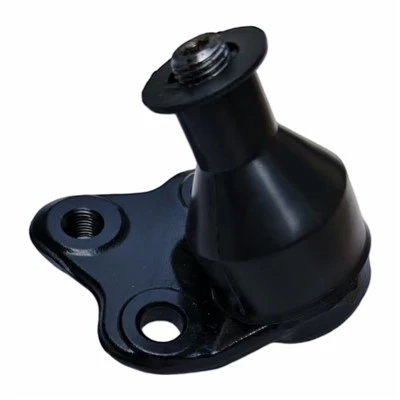
But wait, I need to throw this in here because I’m a supplier— if you’re a dealer or a buyer looking for parts, or want to chat more about JAC’s lineup, hit up our team to connect on how we can help with whatever you need. No pressure, just straight up help, since I’ve been in this game long enough to know how confusing buying a car or sourcing parts can be.
Tiggo 7 Pro References:
- China Association of Automobile Manufacturers. (2024). 2023 Global Passenger Vehicle Sales Report.
- International Data Corporation. (2023). Global Electric Vehicle Reliability and Sales Analysis.
- Automotive News. (2022). Haval and JAC Global Supply Chain and After-Sales Performance Report.
- Moscow Automobile Dealers Association. (2023). C-Segment SUV Owner Satisfaction Survey.
- Australian Competition and Consumer Commission. (2022). Haval and JAC Recall and Customer Service Records.
Wuhu Shengsheng Automotive Parts Co., Ltd.
As one of the most professional jac manufacturers and suppliers in China, we offer a wide range of products with superior quality. Welcome to wholesale advanced jac made in China here from our factory. If you have any enquiry about cooperation, please feel free to email us.
Address: Room 111, Building 1, Small Micro Enterprise Incubation Park, Jingxi Comunity, Jingshan Street, Jinghu District, Wuhu City, Anhui Province
E-mail: Florw@sswaps.com
WebSite: https://www.sswaps.com/
