If you’ve ever stood near a working substation on a clear day, you might have noticed large, silvery pieces of equipment standing in open air, separate from the hum of transformers or the flicker of switchgear. That’s often an air-insulated high voltage disconnector, and if you’re in the business of power distribution or transmission, you’ll know how critical this quiet workhorse is to keeping electricity flowing safely. I’ve spent 12 years selling and troubleshooting high voltage equipment, and I still get asked by new clients, “Wait, what exactly is that thing, and why can’t I skip it for something smaller?” Let me break it down, not with jargon that makes your eyes glaze over, but with the kind of real-world context I’ve picked up on jobs from rural substations in the Midwest to industrial facilities on the West Coast. High Voltage Disconnector
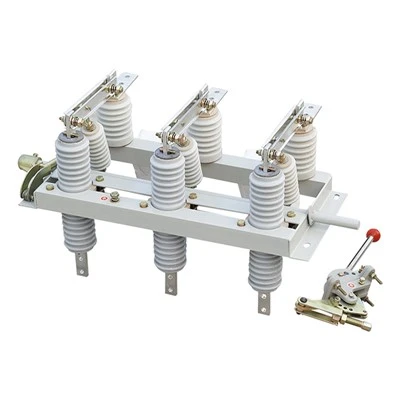
First, let’s get the basics straight: an air-insulated high voltage (AHV) disconnector is a mechanical switch designed explicitly for opening or isolating parts of a high voltage electrical system when the circuit is de-energized. That last part is non-negotiable, and it’s the biggest difference between a disconnector and other high voltage switches you might have heard of—like circuit breakers. Circuit breakers are built to interrupt high load currents, even fault currents that can reach tens of thousands of amps in milliseconds. Disconnectors? They can’t do that. If you try to open a disconnector while current is still flowing through the line, you’ll get an arc that can jump across the open gap, melt parts of the equipment, or even start a fire. That’s not just a minor mistake—it’s a safety hazard for your team, your facility, and the surrounding community.
So why would anyone use an AHV disconnector instead of, say, a gas-insulated version? The name gives the first clue: instead of being enclosed in a tank filled with sulfur hexafluoride (SF6) or another insulating gas, the live parts of an AHV disconnector are exposed to the surrounding atmosphere. That’s a huge plus for two big reasons: cost and maintenance. Gas-insulated units can be 30 to 50 percent more expensive upfront, and you have to regularly test for gas leaks, top off pressure, and replace seals every few years, even if nothing is wrong. With air-insulated units, you just wipe down the exterior a couple times a year, check the operating mechanism, and test the insulation resistance—no specialized gas testing gear required. For remote substations where access is limited or utility budgets are tight, that’s a game-changer.
Now, let’s talk about how they work, because watching a well-tuned disconnector operate is like watching a well-oiled machine—simple, reliable, and designed for one clear job. Most AHV disconnectors have two main parts: a fixed contact (usually a set of metal bars or posts mounted on porcelain or composite insulators) and a moving blade that swings into place to connect or pull away from the fixed contact. The insulators do double duty here: they hold the live parts high enough off the ground to prevent flashover to earth, and they insulate the live parts from each other. The operating mechanism—often a motor, a gearbox, or even a manual winch for smaller units—swings that blade. When it’s closed, the blade presses firmly against the fixed contact, creating a low-resistance path for current. When it’s time to isolate a section, the operator triggers the mechanism, and the blade swings open, creating a visible air gap between the two contacts. That visible gap is one of the most important features, by the way. When you’re working on a line, you need to be able to see that gap with your own eyes to confirm the line is dead, not just rely on a meter that could have a faulty connection. No other high voltage switch gives you that kind of visual confirmation, which is why OSHA and most electrical safety standards require disconnectors (or other visible break devices) for lockout-tagout procedures.
Wait, but what about bad weather? If the live parts are exposed to rain, snow, dust, or salt air, won’t that cause problems? Great question—one I hear all the time from clients in coastal areas or desert regions. Modern AHV disconnectors are built with specific design features to handle that. For example, insulators are often made with hydrophobic polymer coatings that repel water, preventing the formation of a conductive water layer on the surface that could cause flashover. In areas with heavy pollution (like near industrial plants or busy roads), we can add extra sheds to the insulators, which are small ridges that break up water streams and dust buildup, increasing the distance current has to travel to reach the ground. And for extreme cold, the operating mechanisms have heating elements that prevent grease from thickening or ice from jamming the blades—something we started installing after a client in Minnesota had a unit freeze up during a blizzard a few years back. We learned a lot from that call, and now all our cold-weather units come standard with that heating system.
I mentioned earlier that disconnectors aren’t for interrupting load current, but let’s clarify that with a real example. Suppose you have a substation that feeds power to a manufacturing plant. Every few months, the plant needs to upgrade its equipment, so the line serving the plant needs to be shut down. First, the operators will trip the circuit breaker that feeds that line—this cuts all the current, making the line safe. Then they open the AHV disconnector, creating that visible gap. Only then can the maintenance team go to work, confident the line isn’t energized. If they tried to open the disconnector first, while the circuit breaker was still closed, the arc would be massive—enough to destroy the disconnector and potentially damage the circuit breaker, which would be a huge outage for the whole substation. That sequence: break the circuit with a breaker, then isolate with a disconnector, is non-negotiable, and it’s why both pieces of equipment are required for safe high voltage work.
Now, who uses AHV disconnectors? Honestly, just about anyone working with high voltage. Utilities rely on them in transmission substations, distribution feeders, and switching stations. Industrial facilities—from steel mills to data centers—use them to isolate parts of their power system during maintenance, because data centers can’t afford unplanned outages, so being able to isolate a section for work without taking the whole facility down is critical. Even renewable energy farms, like solar or wind parks, use them to disconnect arrays or transformer stations during storms for safety. We’ve shipped units to clients across North America, from small municipal utilities with only two substations to Fortune 500 companies with sprawling industrial campuses.
One of the biggest advantages our AHV disconnectors offer, compared to generic units, is their reliability in variable conditions. Early air-insulated units were prone to flashover in high humidity or heavy dust, but we’ve worked with material scientists to refine the insulator coatings and blade design over the last decade. Our latest line of AHV disconnectors have a 40 kV insulation level (and higher models for 115 kV, 230 kV systems) and a 30,000 mechanical operation lifespan—meaning they can be opened and closed 30,000 times before needing major maintenance, which is double the average for comparable units on the market. That matters because a disconnector that fails mid-isolation isn’t just a nuisance—it can delay maintenance, extend outages, and create safety risks.
I also want to address a common myth I hear: that air-insulated disconnectors are outdated, and gas-insulated units are the only way to go. That’s not true for most applications. Gas-insulated units have their place, like in dense urban areas where space is at a premium and substations are underground or in small rooms, where you can’t have large exposed equipment. But for 70 to 80 percent of high voltage applications, air-insulated units are the better choice, because they’re cheaper, easier to maintain, and safer for long-term use. They also don’t have the environmental impact of SF6, which is a greenhouse gas 25,000 times more potent than CO2 over a 100-year period. For clients working to meet sustainability goals, air-insulated disconnectors are a much greener option, no hidden emissions from gas leaks or disposal.
Let me tell you about a recent project that sums up why this matters. Last year, a municipal utility in northern Ohio reached out to us. They had an aging substation that served 12,000 residents and small businesses, and their old AHV disconnectors were failing every few years, leading to unplanned outages in the winter. They were considering switching to gas-insulated units, but when we did a site assessment, we found their substation had plenty of space for air-insulated units, and their maintenance team was already trained to handle air-insulated equipment. We worked with them to replace all their old units with our new line of AHV disconnectors, and since installation a year ago, they’ve had zero issues. The upfront cost was 40 percent lower than gas-insulated units, and their maintenance team didn’t need any special training, which saved them thousands in additional labor. They even told us they’re recommending our units to neighboring utilities, which is the best kind of referral you can get.

If you’re shopping for AHV disconnectors, there are a few key things to look for. First, make sure the unit is rated for the voltage of your system—don’t buy a 34.5 kV unit for a 115 kV line, that’s a safety hazard. Second, check the mechanical lifespan—like I said, 30,000 operations is a good benchmark, but don’t settle for less. Third, look at the insulator design: if you’re in a coastal or polluted area, make sure the insulators have extra sheds and a hydrophobic coating. And finally, work with a supplier that offers ongoing support, not just a box to ship. We don’t just sell you a disconnector and disappear—we offer on-site installation support, training for your maintenance team, and 24/7 technical support if you run into an issue. High voltage equipment isn’t something you want to troubleshoot at 2 a.m. during a snowstorm without someone who knows what they’re doing.
High and Low Voltage Switchgear At the end of the day, an air-insulated high voltage disconnector is more than just a piece of metal and porcelain. It’s a safety device that keeps maintenance teams safe, keeps power flowing, and saves money for utilities and industrial operators. It’s the unassuming workhorse that makes all the other high voltage equipment around it work properly, because without a reliable way to isolate sections of the system, you can’t do any maintenance, any upgrades, or any troubleshooting. If you’re in the market for an AHV disconnector, I’d encourage you to reach out to talk through your specific needs—whether you’re a small utility looking for a few replacement units or a large industrial client planning a new substation. We can walk you through the different models, help you pick the right one for your environment, and answer any questions you have, no sales pitch required, just real advice from people who have been in the field working with this equipment for years.
References
- International Electrotechnical Commission. High-Voltage Switchgear and Controlgear – Part 1: Common Specifications. IEC 62271-1, 2017.
- Occupational Safety and Health Administration. Electrical Safety-Related Work Practices. 29 CFR 1910.331–1910.335, 2022.
- CIGRE Working Group A3.15. Environmental impacts of SF6 in electrical equipment. CIGRE Technical Brochure No. 560, 2013.
- Institute of Electrical and Electronics Engineers. Standard for High-Voltage Switchgear. IEEE C37.100, 2021.
Zhongtai Electric Power Technology Co., Ltd.
With abundant experience, we are one of the most professional high voltage disconnector manufacturers and suppliers in China. We warmly welcome you to wholesale bulk customized high voltage disconnector from our factory. If you have any enquiry about quotation, please feel free to email us.
Address: High-tech Industrial Park, Chongren County, Fuzhou City, Jiangxi Province (No. 261 Yingbin Avenue)
E-mail: info@zhongtaielectric.com
WebSite: https://www.zhongtaipower.com/
