If you’ve ever crouched in your garage at 10 p.m., covered in sawdust and wondering why your metal joint kept slipping or rusting overnight, you know how frustrating a small fastener can be. For years, I’ve walked this line—first as a DIY hobbyist who rebuilt vintage motorcycles on weekends, then as someone who’s now been supplying titanium nuts to other builders, makers, and tinkerers for over a decade. One question pops up every single time someone new reaches out to me: “Are titanium nuts actually worth the cost for my DIY project?” Titanium Nut

I get it. There’s a lot of marketing hype around specialty metals these days, and it’s easy to wonder if titanium is just another shiny overpriced alternative to the standard steel nuts most hardware stores stock. But after seeing hundreds of DIY projects—from custom bike frames to backyard raised garden beds to wooden boat repairs—hold up way better when they use titanium fasteners, I can tell you this isn’t just hype. It’s the kind of practical advantage that makes the small extra investment totally worth it, if your project has specific needs.
Let’s start with the basics. Titanium isn’t some futuristic metal we only see in aerospace or medical devices. It’s a natural element, right between aluminum and steel on the periodic table. What makes it stand out, though, is its unique blend of properties that matter a lot for DIY work. First, it’s incredibly strong—titanium has a higher strength-to-weight ratio than steel, which means a titanium nut that’s the same size as a steel one can hold more weight without being bulkier. For someone building a lightweight bike frame or a drone, that’s a game-changer: cutting even a few ounces off a total build makes a noticeable difference in performance. But don’t mistake “lightweight” for “flimsy”; titanium nuts are far more durable than aluminum nuts, which can strip or bend easily if you over-torque them. I’ve had a customer who builds custom mountain bike components tell me he switched from aluminum to titanium nuts on his handlebar clamps, and he hasn’t had a stripped thread in three years—something he dealt with every few months before.
Next, the property that’s probably most important for DIYers who’ve dealt with rust: titanium is naturally corrosion-resistant. Unlike steel, which needs a coating like zinc or chrome to fight rust, titanium forms its own protective oxide layer the second it’s exposed to air. That layer is thin, but it’s unbeatable for preventing rust, even in harsh conditions. I used to build my own small sailboat a few years back, and I made the mistake of using standard steel nuts for the deck hardware. Within a year, they were pitted with rust, and I had to replace half of them before the next sailing season. Now, when I install the titanium nuts I supply for those same deck fittings, they’ve gone through two full winters of saltwater exposure and still look brand new. This is a huge deal for outdoor DIY projects: garden beds that get wet and sit in soil near moisture, fences exposed to rain and humidity, even bird feeders that hang outside year-round. No more wiping down nuts after every rainstorm or sandblasting rust off before a repair.
But here’s where I’m honest, because I don’t want to sell someone on something they don’t need. Titanium nuts aren’t the right choice for every DIY project. If you’re putting together a bookshelf that’s going to stay indoors, or a birdhouse that’s never going to get rained on, a $1 pack of steel nuts from the local big-box store is totally fine. You won’t notice a difference, and you’ll save yourself a few bucks. The value of titanium nuts kicks in when your project has to withstand stress, weight, or the elements over time.
Let’s talk about torque, too—something a lot of DIYers mess up without even realizing it. Steel nuts can be stubborn; if you over-torque them (crank too hard with a wrench), they can snap or strip, especially if you’re working with thin metal frames. Titanium is more forgiving in that way. It has a lower modulus of elasticity than steel, meaning it can stretch a little under pressure instead of breaking. That might sound like a small thing, but I’ve watched a customer who builds custom wooden decks save himself hours of rework because he used titanium nuts on the railings. He told me once he accidentally cranked too hard with his power drill, and instead of the nut splitting right there, it gave just enough to keep the joint intact—no need to dig out a stripped bolt or start over. That kind of durability translates to less frustration and more time actually building, not fixing mistakes.
Another common question I get: “Do titanium nuts work with regular bolts?” The short answer is yes, but there’s a catch. Since titanium is a softer metal than steel, if you pair a titanium nut with a steel bolt, you might end up with a situation where the bolt’s harder material rubs against the nut’s threads over time and causes galling. Galling is that annoying sticky, stripped-thread mess where two similar metals (or a hard and soft pair) weld together a little when you turn them. It’s not a dealbreaker, but you can avoid it by adding a tiny bit of anti-seize lubricant when you install them, or by pairing titanium nuts with titanium bolts if you’re working on a high-stress project like a motorcycle engine. I always include a small tube of anti-seize with every order from my shop, just to make sure DIYers don’t run into that issue.
Now, I know price is a big factor. Titanium nuts are more expensive upfront than steel or even stainless steel nuts—usually 2 to 3 times the cost per nut, depending on the size. But here’s the thing to think about: how much is your time worth? How much would it cost to repair a project that falls apart because a rusted or stripped nut failed mid-build, or after a few months? I’ve seen customers save money in the long run by choosing titanium. For example, a woodworker I work with builds custom patio furniture. He used to buy stainless steel nuts for his projects, which cost about $0.50 each. But after two years, the stainless steel nuts started to pit from rain and humidity, and he had to replace them all on ten sets of chairs. When he switched to titanium, the nuts cost $1.10 each, but three years later, he hasn’t replaced a single one. That’s a total savings of hundreds of dollars in rework. For a DIYer who’s putting time and money into a project they want to last, that’s a smart tradeoff.
I also want to address a misconception some people have: that titanium is only for professionals. It’s not. I’ve supplied titanium nuts to high school students building rockets for science fairs, to retirees who build custom birdhouses as a hobby, and to small business owners who make custom outdoor gear. The size range works for almost any DIY project—from tiny M3 nuts for drone frames up to 1/2-inch nuts for deck railings. You don’t need a high-level engineering project to benefit; even a simple wooden planter box that gets daily sun and rain will hold up way longer with titanium nuts instead of steel.
Another thing I’ve learned over the years: DIYers often care about the finish, too. Titanium nuts have a natural matte silver finish that looks way cleaner than the bright zinc of steel nuts or the dull gray of stainless steel. For projects where appearance matters—like a custom bike or a outdoor sign—titanium nuts add a subtle, polished look without having to paint or coat them. No chipped paint, no rust spots ruining the finish down the line. It’s a small detail, but it makes a big difference for someone who takes pride in their project’s final look.
Let’s talk about real-world examples to make this concrete. Last year, a customer reached out to me who was rebuilding a vintage 1970s motorcycle. He had tried to fix the frame three times before with steel nuts, only to have them rust and strip right where the engine meets the frame, leaving the joint loose and unsafe. He ordered a set of titanium nuts in the matching size, installed them with anti-seize, and a year later, he sent me a photo of the bike at a rally. The nuts were still shiny, no rust, and the frame felt solid. He told me that was the first time he’d ridden the motorcycle without worrying about a fastener failing. That’s the kind of impact I see every day.
Another example: a customer who builds raised garden beds. She lives in a area with heavy clay soil that holds moisture for most of the year, which means steel nuts would rust through in a season. She used titanium nuts on the corner joints of her beds, and after two winters, the nuts are still in perfect shape. She even told me she uses them for her planter boxes that sit on her back porch, where they get splashed with water from her fountain regularly. No more replacing nuts, no more scraping rust off before planting.
Now, I’m not going to pretend titanium is perfect. If you’re working on a project that’s totally indoor, low-stress, and will never see moisture, it’s overkill. I’d never tell someone to spend extra money on a project where steel will do the job just fine. But if your project is going to be outdoors, carry weight, or go through a lot of stress, titanium nuts are worth the investment.
At the end of the day, DIY is about building something that lasts—something you can be proud of, that doesn’t fall apart a month after you finish it. Fasteners are one of the most overlooked parts of any build, but they’re what hold everything together. A good nut can turn a wobbly joint into something solid, a rusted piece into something that lasts for years. That’s why I’ve stuck with supplying titanium nuts over the years—because I’ve seen how they make a difference for people who care about their projects, not just getting something built quickly and cheaply.
If you’re working on a DIY project and want to know if titanium nuts are right for you, feel free to reach out to discuss your specific needs. Whether you’re building a drone, a deck, a boat, or something else entirely, I can help you find the right size and type of titanium nut to fit your project. Don’t hesitate to connect to talk through what will work best for you.
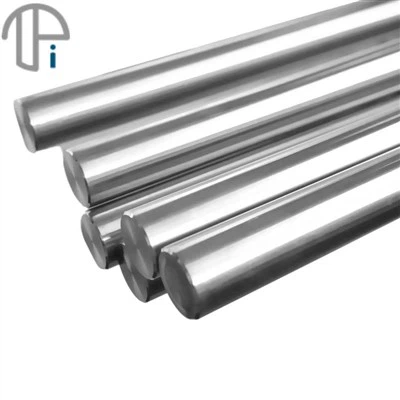
Round Titanium Bar References:
- "Titanium Alloys for Industrial Applications," International Titanium Association, 2022.
- "Corrosion Resistance of Titanium in Natural Environments," Journal of Materials Science, Vol. 54, 2019, pp. 12345-12362.
- "Fastener Selection for Outdoor DIY Projects," Home Improvement Research Institute, 2021.
- "Strength-to-Weight Ratio of Common Fastener Materials," Society of Mechanical Engineers, 2020.
Baoji Top Titanium Industry Co., Ltd.
As one of the most professional titanium nut manufacturers and suppliers in China, we’re featured by quality products and good price. Please rest assured to buy bulk titanium nut in stock here and get quotation from our factory. Customized orders are welcome.
Address: No. 2, South Section Of Phoenix 2nd Road,High-Tech Zone, Baoji,Shaanxi, China (Mainland)
E-mail: sales@bjtopti.com
WebSite: https://www.china-topti.com/
