If you’ve ever walked past a construction site, delivered a fragile parcel, or even sipped a drink from a takeout cup lined with polystyrene foam, you’ve interacted with EPS—expanded polystyrene, the lightweight, insulating material that hides in plain sight across so many industries. But what most people don’t see is the machinery that turns raw plastic beads into uniform, durable EPS blocks: the EPS block molding machine. As a supplier who’s worked with manufacturers, construction teams, and packaging specialists across three continents for over a decade, I’ve watched these machines evolve from clunky, low-output devices to precision tools that redefine what EPS can do. Today, I want to break down the real, practical advantages of investing in an EPS block molding machine, from cost savings to sustainability, and why they’re not just a nice-to-have—they’re a game-changer for any business that works with EPS. EPS Block Molding Machine
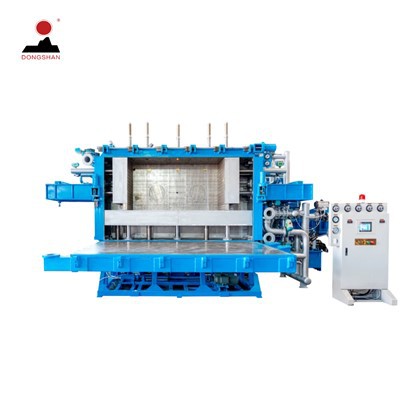
Let’s start with the most obvious benefit: material efficiency, which directly translates to lower costs for every batch of EPS you produce. Back in the early days of my career, I worked with a small packaging company that was outsourcing all their EPS blocks. They’d order standard sizes, often leaving 20% of the material unused because custom cuts were expensive, and the blocks themselves were inconsistent—some too porous for shipping heavy equipment, others too dense to keep food cold during transport. When they purchased their first EPS block molding machine, that number dropped to less than 5% waste, and here’s why: modern molding machines heat and expand only the amount of polystyrene beads you need, with zero excess material leftover. The key is the precision of the steam injection system, which controls expansion rate, density, and size down to the millimeter. Unlike cutting pre-formed blocks (which generates sawdust and small offcuts that can’t always be recycled), a molding machine makes blocks to exact specifications, so you never pay for material you don’t use. I’ve had clients tell me that in the first six months of using their own machine, they cut their EPS material costs by 22%—that’s money they could put toward growing their business, not sending to a third-party manufacturer.
Next up, consistency and quality control, which are non-negotiable for industries where EPS serves a critical purpose. Take the construction sector, for example: EPS blocks are used for insulated concrete forms (ICFs), a system that builds energy-efficient walls. If an EPS block is too porous, it won’t provide the required R-value (a measure of thermal resistance), leading to higher energy bills for the building owner. If it’s too dense, it’s unnecessarily heavy, making the ICF hard to install and increasing overall project costs. When you outsource EPS production, you’re at the mercy of someone else’s quality checks. A bad batch of blocks can delay a construction project for weeks, or worse, lead to warranty claims down the line. With an in-house EPS block molding machine, you control every step of the process: you set the steam temperature, the expansion time, the pressure, and the cooling period. Every block that comes out is identical in size, density, and insulation properties. I had a client in the Midwest who builds custom ICF homes; they used to receive blocks that varied by 10 pounds per cubic meter in density, leading to inconsistent insulation across walls. After investing in their own molding machine, that variation dropped to less than 1%—their customer satisfaction scores jumped, and they eliminated the cost of reworking or replacing defective blocks. For the food and pharmaceutical industries, where EPS is used for temperature-controlled shipping, that consistency isn’t just a cost saver—it’s a compliance issue. You can’t afford a shipment of vaccines that arrives too warm because your EPS packaging was the wrong density.
Sustainability is another huge advantage, and one that’s become a top priority for every business I work with these days. For years, people wrote off EPS as a non-recyclable waste product, but that’s no longer true—especially with the right machinery. Modern EPS block molding machines use 100% recyclable polystyrene beads, and the offcuts I mentioned earlier? They’re not waste—they can be melted down and reprocessed into new beads to use in future batches. When you outsource EPS, you often have to pay the supplier to recycle any leftover material or offcuts, adding to your operational costs. In-house, you eliminate that fee. Even more, molding machines reduce overall energy use compared to other EPS production methods. A well-designed machine uses closed-loop steam systems that recycle hot water, cutting energy consumption by up to 30% compared to old, open-system machines. I work with a client in the packaging industry that switched from outsourcing EPS to using their own machine, and they reduced their annual carbon footprint by 18%—that’s a number they can put on their product labels, helping them appeal to eco-conscious customers. It’s important to note that not all EPS is bad for the environment; with the right machinery, it becomes a circular material, not a waste product.
Flexibility is often the unsung hero of EPS block molding machines. No two businesses need the same EPS blocks, and outsourced suppliers can’t always keep up with custom orders. Let’s say you’re a manufacturer of playground equipment, and you need custom-shaped EPS blocks that curve to fit playground structures. Or a company that makes custom coolers for fishing boats, which need EPS blocks cut to fit specific internal dimensions. An outsourced supplier might charge a premium for custom dies, and take weeks to deliver. With an EPS block molding machine, you can swap out molds to make blocks of any shape, size, or density in a matter of hours. I’ve had small business clients that used their machine to make not just packaging blocks, but custom display stands for trade shows, insulation panels for tiny homes, and even floatation devices for small docks—all because the machine is flexible enough to adapt to their needs, not the other way around. For larger operations, that flexibility means you can take on custom orders from clients who would otherwise go to a competitor, without waiting weeks for tooling. It’s a competitive advantage that pays for itself quickly.
Wait, but what about upfront costs? I know that’s a big question for anyone considering a new piece of machinery. When I first started in this industry, I would have admitted that a new EPS block molding machine is a significant investment—no one argues that. But when you factor in the long-term savings, it’s almost always a better choice than outsourcing. Let’s do the math: a small to mid-sized machine can cost between $50,000 and $150,000, depending on its output capacity. If you’re outsourcing 10,000 cubic feet of EPS blocks a year at $0.50 per cubic foot, that’s $5,000 a month, or $60,000 a year. That means you pay off a mid-sized machine in less than two and a half years, and after that, every batch of EPS you make is pure profit (minus small operational costs like beads, steam, and maintenance). I’ve seen small businesses that purchased their machine for a specific project and turned it into a side business, making custom EPS blocks for other local companies. The key is to choose a machine that matches your output needs—there’s no reason to buy a high-output machine that can produce 100,000 cubic feet a year if you only need 10,000. A good supplier (that’s me, by the way) will help you assess your production needs and find a machine that fits your budget, not the other way around.
Maintenance is another point I get asked about. People worry that complex machinery will be hard to upkeep, but modern EPS block molding machines are designed to be user-friendly, with automated systems that reduce the need for constant manual labor. Most machines come with intuitive controls that let your operators adjust settings without needing an engineering degree, and routine maintenance is as simple as checking steam lines, cleaning molds, and changing filters—tasks that take an hour a week at most. I provide my clients with 24/7 technical support, and most issues can be fixed remotely in minutes, so downtime is minimal. I’ve had clients that run their machine 10 hours a day, five days a week, for years without any major breakdowns, as long as they follow basic maintenance protocols.
Let’s also talk about space. A lot of my clients worry that an EPS block molding machine will take up half their warehouse. But modern machines are compact, with some models as small as 10 feet by 15 feet, so they fit in most manufacturing spaces. You don’t need a huge, dedicated facility—just enough space for the machine, a small storage area for raw beads, and a ventilation system (which is required for any EPS production, even outsourcing). That’s a big plus for small to mid-sized businesses that don’t have the budget for a large, dedicated production space.
I want to be honest here—EPS block molding machines aren’t for everyone. If you only need a small amount of EPS blocks once or twice a year, outsourcing is still the smarter choice. But if you’re a business that uses EPS regularly for production, shipping, or construction, the advantages add up fast: lower material costs, consistent quality, sustainability, flexibility, and long-term cost savings. Over the past 12 years, I’ve worked with over 200 clients, and almost every one that invested in an EPS block molding machine has told me they wish they’d done it sooner.
Right now, we’re in the middle of a boom for EPS—more companies are using it for sustainable construction, more e-commerce brands are relying on it to ship fragile goods, and more food businesses need it for temperature-controlled delivery. The demand for high-quality, custom EPS blocks isn’t going away; if anything, it’s growing. Having your own molding machine lets you meet that demand on your own timeline, without relying on third-party suppliers that can delay orders or raise prices unexpectedly.
If you’re tired of overpaying for inconsistent EPS blocks, if you want to reduce your operational costs and your carbon footprint, and if you’re looking for a way to grow your business by offering custom EPS solutions, it’s time to talk about investing in an EPS block molding machine. I work with businesses of all sizes, from small startups to large manufacturing plants, and I can help you find the right machine that fits your budget, output needs, and long-term goals. We’ll walk you through every step: from assessing your current production, to training your operators, to providing ongoing maintenance and support. You don’t have to navigate this alone—my team has the expertise to make the transition to in-house EPS production seamless.

Don’t let outdated outsourcing hold your business back. The advantages of an EPS block molding machine are clear, and they can make a tangible difference to your bottom line, your customers, and the planet. If you’re ready to learn more about how an EPS block molding machine can work for your business, reach out to us today to schedule a consultation. We’ll answer all your questions, walk you through our product lines, and help you take the next step toward more efficient, sustainable EPS production.
EPS Pre-expander References:
- American Society for Testing and Materials. (2021). Standard Specification for Expanded Polystyrene (EPS) Foam for Building Insulation. ASTM International.
- European Polyurethane Association. (2022). Sustainability of Expanded Polystyrene in Packaging and Construction. EPA Technical Report.
- National Association of Manufacturers. (2023). Cost Efficiency of In-House Production for Small and Mid-Sized Manufacturers. NAM Economic Outlook.
- Polystyrene Packaging Council. (2022). Circular Economy Practices for Expanded Polystyrene Processing. PPCC Resource Guide.
Hangzhou Fuyang Dongshan Plastic Machinery Co., Ltd.
Hangzhou Fuyang Dongshan Plastic Machinery Co., Ltd. is one of the most professional EPS block molding machine manufacturers and suppliers in China, featured by quality products and low price. Please feel free to wholesale advanced EPS block molding machine made in China here and get quotation from our factory. Customized orders are welcome.
Address: 101 Guanting, Baiqian Villige, Luzhu Town, Fuyang District, Hangzhou City, Zhejiang Province, China
E-mail: xu@dong-shan.cn
WebSite: https://www.epseppmachinery.com/
