Hey there, fellow water quality friends! ???? If you’re a small business owner, homeowner, or just someone who’s been hunting for a solid RO (reverse osmosis) purified water setup, you’ve probably stumbled on a messy question: can RO purified water equipment actually work in areas with low water pressure? Let me cut through the noise as an actual RO equipment supplier—no sales jargon, no clickbait, just real talk that I’ve heard a thousand times from folks dealing with weak water flow at their taps. RO Purified Water Equipment
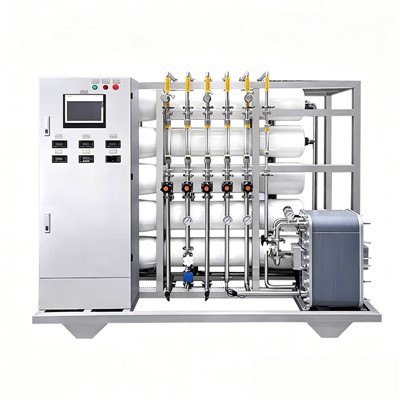
First, let’s keep it super simple so we’re all on the same page. Low water pressure isn’t just “your shower feels like a trickle on a hot day”—it’s water supply coming in at less than 40 psi (pounds per square inch), right? Most standard home plumbing hovers around 40-80 psi, so anything below that is fair game for “low pressure.” Now, how does RO work normally? It’s that membrane that filters out 99% of contaminants, but that process needs a push—water pressure. The pressure forces water molecules through the tiny RO membrane holes, leaving behind sediment, lead, chlorine, even microplastics. If there’s not enough push, the water can’t get through the membrane, and the whole system just… stalls. No purified water, that’s it.
But wait—before you throw in the towel and settle for tap water with a filter on your fridge, let’s talk about what that actually means for your RO equipment. I’ve had customers come to me panicking, saying, “My water’s only 25 psi—can I even buy an RO system?” And my answer (9 times out of 10) is “Yes, but you might need a little extra help.” Because here’s the thing: most off-the-shelf RO systems are built for average pressure, but there are specific models designed for low-pressure zones.
Let me break down the two main solutions we offer, since that’s what we do day in and day out. First up: pressure boosters. These little guys are game-changers. A good RO-specific booster pump takes whatever weak incoming pressure you have (think 20-40 psi) and cranks it up to the 60-80 psi sweet spot that most RO membranes love. I’m talking compact pumps that fit right under your sink, no big construction project needed. We’ve had a café in a downtown building where the water pressure was so bad, their espresso machine was failing—they added a booster pump to their RO setup, and now they’re pulling perfect shots every morning. No more wasted coffee, no more customers complaining about water that tastes like old pipes.
But wait, not all booster pumps are created equal, right? That’s where a lot of no-name brands mess up. Cheap pumps burn out in a year because they don’t handle the consistent cycling that RO systems do. The ones we supply are rated for continuous use, have quiet motors (so they don’t sound like a lawnmower under your sink), and actually sync with the RO system’s auto-shutoff feature so they don’t run 24/7 when you’re not using water. That’s a big one—we’ve had customers tell me they tried a random Amazon booster pump that died in 6 months, and now they use ours, and it’s been 2 years no issues.
The second option: low-pressure RO membranes. Wait, not all membranes are the same. Standard RO membranes need that higher pressure to work, but there are “low-fouling, low-pressure RO membranes” that are specifically engineered to push through water even when the incoming pressure is as low as 15 psi. These membranes have a thinner active layer that doesn’t need as much force, so they can still filter out contaminants without a booster pump. The tradeoff? They might produce a little less purified water per day (we’re talking like 10-15% less, which is totally negligible for most home or small business use) and they’re a tiny bit more expensive upfront. But if you don’t want to deal with adding a pump under your sink, this is a solid pick. We sold a set of these to a small cabin in the mountains where the water pressure was like 12 psi from a well, and they now have purified drinking water straight from their tap. Game. Changer.
Now, let’s get real about what doesn’t work. I hear people say “I’ll just plumb the RO system to my hot water line to get more pressure.” Stop. Don’t do that. Hot water damages RO membranes—they’re designed for cold water, or at most lukewarm, but hot water will make the membrane break down way faster, and then you’re buying a new $500 membrane way sooner than you should. Also, don’t try to rig up a pressure washer or something random to boost pressure—those are way too strong and will blow out your RO components. Stick to RO-specific parts, trust me.
Another thing: let’s talk about well water vs. municipal water. A lot of low-pressure areas are rural with well water, which might have extra sediment or hard water. If that’s your case, a booster pump might need a pre-filter upgrade, like a heavy-duty sediment filter, because more sediment can wear out the pump faster. We always recommend testing your water first—we offer free quick test kits for our customers, so you can see exactly what’s in your water and what pressure you’re dealing with, instead of guessing. Because if you skip the test, you might end up with an RO system that’s not the right fit.
Wait, but what about the other parts of the RO system, like the storage tank? Does low pressure affect that? Actually, no—most RO storage tanks are pressurized (they have a bladder inside, like a balloon), so they hold the purified water ready to go even if incoming pressure is low. The only time the storage tank might be slow to fill is if the RO membrane is having trouble pushing water through, which ties back to the pressure issue. So if you add a booster pump, the storage tank will fill up just as fast as someone in a high-pressure area. That’s a big relief for people who hate waiting for their water filter to fill.
I know a lot of you might be thinking, “This sounds like a hassle—why not just use a pitcher filter?” Let’s be honest: pitcher filters are great for a quick glass, but they’re slow, they don’t filter out microplastics or lead as well as RO, and you have to change the filter every month which adds up. For a family of 4, an RO system with a booster pump pays for itself in a year compared to buying bottled water, and it’s way better for the environment. Plus, if you’re a small business, like a bakery or a restaurant, pitcher filters can’t keep up with the volume you need for making dough, brewing tea, or cleaning produce.
Now, let’s talk about common myths I hear all the time. Myth #1: RO systems need a lot of pressure. Nope—only standard ones do. The low-pressure RO membranes and booster pump setups are built exactly for low-pressure areas. Myth #2: Booster pumps use a ton of electricity. I swear, these things are tiny—they use less power than your phone charger. I’ve had customers say they don’t even notice the extra on their electric bill. Myth #3: It’s too expensive to adapt an RO system for low pressure. Let’s break it down: a standard home RO system is around $300-$500. Adding a booster pump is another $100-$150, so total is $400-$650, which is still way cheaper than replacing damaged water pipes or buying bottled water for years. And for small businesses, it’s a tax write-off, so that softens the cost even more.
Wait, what about maintenance? Is an RO system in a low-pressure area harder to maintain? Not really—same as any RO. You just have to change the pre-filters every 6-12 months, and the RO membrane every 2-5 years. The booster pump might need a little check-up every few years, but our pumps come with a 2-year warranty, and we offer free troubleshooting over the phone if anything goes wrong. I can’t tell you how many times I’ve stayed on a call with a customer at 7 PM walking them through replacing a pre-filter, no extra charge. That’s the stuff no big box store will tell you—they just want to sell you a system and forget about you.
Let me throw in a real customer story because this is what makes it real. Last year, a guy named Mike from a suburb with old plumbing came to me. His water pressure was 32 psi, and his old RO system he bought online wasn’t working at all—his membrane was clogged after 6 months, and he was ready to give up. We swapped his old standard membrane for a low-pressure one and added a booster pump. Now, his RO system fills the storage tank in 4 hours, and his water tastes better than bottled water. He told me he’s now recommending our setup to his neighbors. That’s the kind of feedback we live for.
So, to circle back to the original question: Can RO purified water equipment be used in areas with low water pressure? Absolutely. You just don’t need the generic off-the-shelf model. There are two solid options: either pick up an RO system designed for low pressure with a booster pump, or opt for a low-pressure RO membrane that doesn’t need extra pressure. The key is to not guess—test your water, chat with someone who actually installs these systems (like us, obviously), and pick the right parts for your specific pressure.
If you’re dealing with low water pressure and want to get an RO setup that actually works for your home or business, don’t stress. We’ve helped hundreds of people in your exact situation, and we can walk you through every step—from testing your water to picking the right equipment to installing it. No pressure, no pushy sales talk, just straight answers.
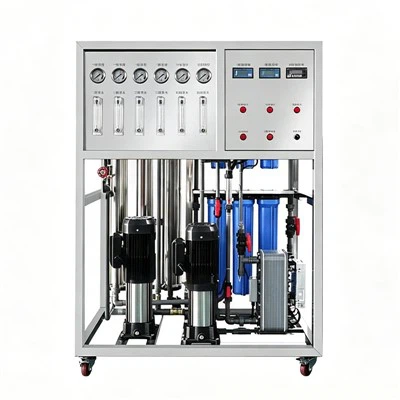
Ready to get started? Reach out to us to chat about your needs and find the perfect RO system for your low-pressure area.
SWRO & BWRO Equipment References
- Water Quality Association. (2022). Reverse Osmosis System Performance in Low-Pressure Residential Applications. WQA Technical Bulletin.
- U.S. Environmental Protection Agency. (2021). Private Well Water Treatment: Reverse Osmosis for Contaminant Removal. EPA Office of Water.
- American Water Works Association. (2020). Pressure Requirements for Membrane-Based Water Treatment Systems. AWWA Journal of Water Treatment.
Shandong Yanuo Environmental Protection Equipment Co., Ltd.
We’re well-known as one of the leading ro purified water equipment manufacturers and suppliers in China, featured by quality products and good price. Please rest assured to buy bulk ro purified water equipment made in China here from our factory. Customized orders are welcome.
Address: North Side of the Road, 1,000 Meters West of the Intersection of Fenghuangshan West Road and Provincial Highway S102, Wangfu Subdistrict, Qingzhou City, Weifang City, Shandong Province.
E-mail: ynhb.499973983@gmail.com
WebSite: https://www.zkyaruo.com/
