If you’ve ever stood on an oil or gas rig under a midday sun that makes steel girders burn to the touch, you know that every piece of equipment there has to work harder than it would anywhere else. For us as a cementing equipment supplier, the question I get asked most often isn’t just “how does this thing work?”—it’s “how does it work when the pressure’s so high it can crack rock, or blow out a line if you get it wrong?” High-pressure environments aren’t just a challenge here; they’re the norm. Let’s walk through how our cementing equipment handles that kind of stress, no fancy jargon, just the stuff we troubleshoot every single day on job sites across the globe. Cementing Equipment

First, let’s get clear on what “high pressure” actually means in cementing work. We’re not talking about the pressure in your car tires. Downhole, at depths of 10,000 feet or more, reservoir pressure can hit 15,000 psi—sometimes even higher, depending on the well. That’s enough to push a column of water 30 miles straight up. On the surface, we have to move cement slurry through lines that can build 10,000 psi or more just to push that slurry past drilling mud and into the annular space between the wellbore and the casing. If our equipment can’t withstand that, we’re looking at a blowout, a failed cement job, and that’s thousands of dollars in downtime, plus a whole lot of safety issues.
So how do we build cementing equipment that doesn’t just survive that pressure, but performs reliably? Let’s start with the core components, because every part has to be engineered for pressure first. Take the cementing manifold, for example. That’s the central hub where all the high-pressure lines connect. You might think a thick steel pipe would work, but not all steel is the same. We use alloy steel grades—think chrome-molybdenum, not the mild steel you’d use for a fence post—because it has higher tensile strength and can resist corrosion from the chemicals in cement slurry and reservoir fluids. The manifold also has pressure-rated valves; not the kind you turn for a garden hose, but ball valves and gate valves rated for 15,000 psi, with metal seats that don’t leak when the pressure spikes. I’ve seen job sites where a cheap valve seat failed mid-job, and we had to shut down in 10,000 feet of water—cost us the client a million bucks in lost production that day. That’s why we don’t cut corners on that part.
Next, there’s the cementing pump. This isn’t the sump pump in your basement. It’s a reciprocating positive displacement pump, and it has to move thick, abrasive cement slurry at pressures that would crush a regular pump. The key here is the power end and the fluid end. The power end uses large, heavy-duty gears and crankshafts to generate the force, but the fluid end is what actually handles the slurry. It has liners made of high-chrome cast iron or ceramic, because cement has sand and other additives that wear down metal fast. If the liner wears thin, the pressure drops, and your cement job is compromised. We test every pump we build to 125% of its maximum rated pressure before it leaves our shop—no exceptions. I’ve had clients ask if we can skip the high-pressure test to save time, but I tell them: you don’t want to find out your pump fails at 12,000 psi when you’re at 9,500 psi downhole. It’s not worth the risk.
Then there’s the pressure control system, which is the brain of the whole operation. High-pressure environments are dynamic—reservoir pressure can shift, the viscosity of the cement slurry can change, and if you don’t adjust in real time, you can overpressurize the well. Our pressure control systems use a combination of analog gauges for backup and digital sensors that feed data to a control panel. That panel lets our operators adjust pump speed, pressure, and flow rate without having to touch the lines. We also have pressure relief valves built into every system—if the pressure gets too high, the valve opens automatically to vent excess pressure, preventing a rupture. Last year, we had a job in the Gulf of Mexico where reservoir pressure spiked unexpectedly. The relief valve kicked in in milliseconds, and the only damage was a small pressure gauge that had to be replaced. The client didn’t have to shut down, and that’s exactly what we design for.
Wait, but what about the pressure from the outside? When you’re cementing a well, the wellbore isn’t just empty space—it’s filled with drilling fluid, and that fluid has its own hydrostatic pressure. If our cement slurry isn’t heavy enough, that fluid can migrate into the cement, leading to gas leaks later on. So we also design our equipment to handle density control, which ties into pressure management. We have density measurement tools that monitor the cement slurry as it’s being pumped, adjusting the mix if the density is off. That way, the column of cement we’re pushing down has enough hydrostatic pressure to balance the reservoir pressure, preventing those leaks. It’s a feedback loop: pressure affects density, density affects pressure, and our equipment has to keep both in check.
Now, let’s talk about something that most people don’t think about: pressure cycling. Cement jobs aren’t just a single shot of pressure. You pump cement, then you pump a spacer, then you pump more cement, and then you displacement fluid—all while pressure is going up and down hundreds of times in a single job. That’s called cyclic pressure, and it can cause metal fatigue over time. A pipe that can handle 15,000 psi once might crack after a thousand cycles of going from 0 to 15,000 psi and back. So we design our equipment to handle cyclic pressure too. We use fatigue-rated steel, and we test each component through thousands of pressure cycles in our test lab before it’s approved. We also recommend that our clients inspect their equipment after every job, because even the best equipment can develop micro-cracks over time that only show up during pressure testing.
I should also mention safety systems, because high-pressure environments are dangerous. No matter how well-engineered the equipment is, there’s always a risk of a leak or a rupture. That’s why our cementing equipment has pressure-locked connections—they don’t come loose even if the line is pressurized, so you don’t have to worry about a line whipping around if there’s a leak. We also include remote shut-off systems, so if an operator sees a pressure spike or a leak, they can shut down the whole system from a safe distance, not right next to the line. Early in my career, I worked a job where a line coupling came loose when we were at 10,000 psi. The line whipped 50 feet across the rig, and it was pure luck no one was hurt. That’s why we design every part of our equipment with that kind of safety in mind—we don’t want anyone going home injured because of a piece of equipment we built.
Let’s get real here: there’s no such thing as “foolproof” cementing equipment in high-pressure environments. Even the best-designed system can have an issue if it’s not maintained properly. That’s why we don’t just sell equipment—we work with our clients to make sure they know how to operate it under pressure. We have field technicians who go to job sites, train operators on how to read pressure gauges, adjust for changing reservoir conditions, and do routine maintenance. For example, we teach operators to check valve seals before every job, because a small leak in a seal can turn into a big problem at high pressure. We also provide real-time support over radio or satellite links, so if an operator hits a pressure spike they’ve never seen before, they can call us and we can walk them through the steps to fix it.
Last year, we had a job in the Permian Basin where we were cementing a horizontal well at 12,500 psi downhole. The reservoir pressure was higher than we expected, so we had to adjust the cement mix on the fly while we were pumping. Our pressure control system let the operator tweak the pump speed and density in real time, and the relief valve kicked in a couple times when the pressure spiked. The job went off without a hitch, and the client told us it was the smoothest cement job they’d had all year. That’s the kind of result we design our equipment for—performance when it matters most.
So to circle back: how does cementing equipment work in high-pressure environments? It works because every component is engineered for pressure first, with materials that can handle the force, systems that adjust to dynamic pressure changes, safety features that prevent catastrophes, and support that makes sure operators know how to use it right. It’s not rocket science, but it’s the kind of engineering that requires paying attention to every small detail, because one small mistake can turn into a huge problem in a high-pressure well.
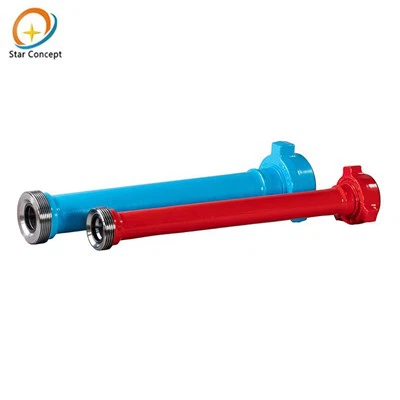
At the end of the day, our job as a cementing equipment supplier isn’t just to sell pumps and manifolds. It’s to give our clients the tools they need to get the job done safely and reliably, even when the pressure is so high it feels like the whole well is pushing back. If you’re working on a high-pressure well and you need equipment that can handle the heat, the stress, and the spikes, we’re here to help. Reach out to us to discuss your project and find the right solution for your job.
Instrumentation References:
- American Petroleum Institute. (2020). Specification for Cementing Materials for Well Construction (API Spec 10). Washington, DC: API Publishing Services.
- Crook, R. J. (2018). High-Pressure Cementing: Design, Equipment, and Operations. Journal of Petroleum Technology, 70(5), 44–49.
- Nace International. (2021). Corrosion Control in High-Pressure Oil and Gas Operations. Houston, TX: NACE International.
- Sarran, J., & Smith, K. (2019). Fatigue Resistance of Wellhead Equipment Under Cyclic Pressure Loading. SPE Drilling & Completion, 34(2), 187–195.
Dongying Star Concept Petroleum Equipment Co., Ltd.
We are one of the most professional cementing equipment manufacturers and suppliers in China. With abundant experience, we warmly welcome you to buy durable cementing equipment made in China here from our factory. Good service and quality products are available.
Address: No. 9 Xisi Road, Dongying City, Shandong Province, China
E-mail: ellen@starconcept.cn
WebSite: https://www.star-cementing.com/
