If you’ve ever ordered custom sheet metal parts for OA (office automation) gear—think printer frames, scanner housings, or copier internal brackets—you’ve probably wondered: “How big can I actually go with these parts?” As someone who’s been in the OA sheet metal supply game for 7 years now, I’ve heard this question a hundred times from design engineers, project managers, and even small business owners putting together in-house office equipment. It’s not a random ask, either: making a part too big can blow up your costs, cause manufacturing delays, or even make the final product impossible to ship. Go too small, and you’re wasting material (and money) on parts that could be streamlined. So let’s break this down, straight from the shop floor, no corporate jargon, just real talk about what works for OA equipment sheet metal parts. OA Equipment Sheet Metal Parts
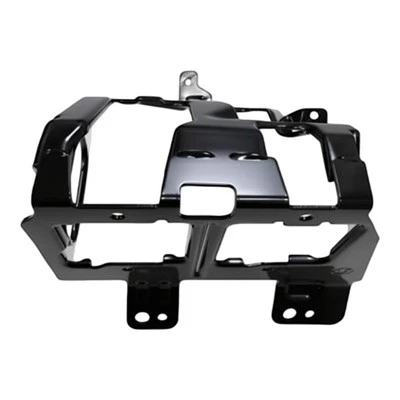
First, let’s get one thing clear: there’s no universal “one size fits all” maximum. It depends on three big factors: what machine we’re using to cut, bend, and form the metal; the material itself (steel vs. aluminum vs. zinc alloy); and what your final OA part actually does. Most of our clients work with thin-gauge materials for OA stuff—usually 0.5mm to 2.0mm thick, because thick metal adds weight that’s a nightmare for office printers and scanners. For sheet metal fabrication shops like ours, the standard maximum part size isn’t a number we pull out of thin air; it’s tied to the machines we have on the floor to keep turnaround times fast (our average lead time is 10 days, so we can’t wait weeks for custom tooling).
Let’s start with the cutting stage, since that’s the first step in making any sheet metal part. Most of us use fiber laser cutters these days—way more precise than old plasma cutters, perfect for the tight tolerances OA parts need (you don’t want a scanner frame that’s slightly off, because that can make the scanner’s feed mechanism jam). Our top-of-the-line fiber laser has a work envelope of 3000mm x 1500mm (that’s roughly 118 inches x 59 inches) for flat parts. Wait, that’s a big sheet—why can’t we cut a printer base that’s 3200mm long? Because the laser’s beam can’t reach that far without losing power, and the table itself can’t hold a sheet that big without warping. Warping is a huge issue: if a sheet warps during cutting, the next steps (bending, assembly) get messed up, and we have to scrap it. For most small to mid-sized OA parts—think a printer’s side panel or a scanner’s internal support arm—this 3000x1500mm limit is more than enough. But what about big-ticket items, like the main frame of a multi-function copier (MFC) that’s 2 meters wide? That’s 2000mm, which fits just fine under our laser. We actually did a job last year for a copier manufacturer that needed a 2800mm frame for their large-format MFC, and we cut it with no issues—we just clamped extra supports to the sheet to prevent warping during the process.
But cutting is only half the battle. The bending stage is where a lot of people get tripped up. A sheet metal part is rarely flat—you bend it to make it rigid, right? So the maximum bendable part size depends on our press brake. Our largest press brake has a bending length of 3200mm (about 126 inches), but here’s the catch: the longer the part, the more springback you get. Springback is when the metal bends a little back after we let go of the press brake, and for OA parts, springback is a big no-no—you need exact angles to ensure parts fit together during assembly. For example, an MFC’s paper feed tray needs a 90-degree bend that’s exactly 90 degrees, not 88 or 92, otherwise the paper will jam. For parts under 2500mm, we can adjust the press brake’s tonnage to compensate for springback, but over 3000mm, the tonnage has to be higher (our press brake tops out at 200 tons) and we have to do extra quality checks. Last quarter, we tried bending a 3100mm aluminum bracket and got a 3-degree springback—we had to re-bend it, which added 2 days to the job. So even though the press can handle 3200mm, we usually cap bendable parts at 3000mm for OA equipment, just to keep quality consistent.
Now, what about forming and welding? Those are the next steps for parts that need more complex shapes, like a copier’s toner compartment housing. Forming uses dies to create curves or protrusions, and dies are only so big. Our largest forming die is 2800mm, so if you need a formed part, the maximum size is a little smaller than cutting or bending. Welding is different—we can weld two smaller parts together to make a bigger one, right? Wait, that’s a trick a lot of OA part suppliers use, and it’s totally fine for most applications. For example, if you need a 3500mm printer frame, we can cut two 1750mm parts, weld them together, and grind the seam smooth so it looks like one piece. The key here is that welding adds a step, so it increases cost and lead time—something to keep in mind if you’re on a tight budget. Our clients usually only go the welded route if their part is over 3000mm, because it’s not worth the extra cost for smaller sizes.
But wait, material matters a lot here. Most OA parts are aluminum or cold-rolled steel (CRS), but some use stainless steel, especially for parts that need to resist corrosion, like a coffee machine’s metal base (which is a type of OA equipment, believe it or not). Aluminum is softer than steel, so it’s easier to cut and bend, which means we can go a little bigger. For aluminum parts, we’ll occasionally push up to 3100mm if the design allows, whereas for cold-rolled steel, we stick to 3000mm max, and stainless steel is even more limited—we usually cap stainless steel parts at 2800mm, because it’s harder and more prone to warping. Last year, a client tried to make a 3000mm stainless steel document shredder housing, and the warping during cutting was so bad we couldn’t bend it evenly. We had to suggest cutting it into two parts and welding, which ended up working way better.
Now, let’s talk about real-world OA examples to put this in perspective. A standard office laser printer (like the ones used in small businesses) has a main frame that’s usually 400mm x 500mm—way under our 3000mm limit, no issues at all. A mid-sized multi-function copier, the kind that can print 50 pages a minute, has a frame that’s around 1500mm wide—still way under. The only OA parts that get close to our maximum are large-format devices, like wide-format printers (used for blueprints or posters) which can have frames up to 2500mm, and industrial document scanners that can be 2800mm long. We did a job a while back for a large blueprint printing company that needed a 2700mm steel frame for their new wide-format model, and it fit perfectly on our laser, bent without any springback, and shipped on time. That’s the sweet spot—using our machines’ full capacity without running into quality issues.
Of course, there are exceptions. Some clients need parts that are bigger than 3200mm, and we can handle that—we just don’t do it in-house. We partner with a sister fabrication shop 2 hours away that has a 4000mm laser cutter and 4200mm press brake, so we can outsource those big parts. But here’s the thing: we only outsource when it’s necessary, because it adds cost (about 20% more than in-house) and 3 extra days of lead time. Most of our OA clients don’t need parts that big, so we stick to our in-house max of 3000mm for cutting/bending, 2800mm for forming, and welded parts up to 4500mm if needed.
I’ve also seen what happens when someone ignores these limits. A client a couple years ago tried to get a 3500mm printer frame cut from our laser, saying “just cut it and it’ll work.” We tried, but the sheet warped so bad after cutting that when we tried to bend it, it split along the edge. We ended up having to scrap the sheet and suggest splitting it into two parts, which the client was unhappy about at first, but saved them from having a faulty product that would jam every time they turned it on. That’s the big thing with sheet metal for OA equipment: it’s not just about size, it’s about how that size interacts with the tools we use. If you’re working within the shop’s capabilities, you get a better part, faster, and for less money.
Another factor to consider is shipping. Even if we can make a 3500mm part, can you actually ship it? Most standard freight trailers are 16 feet long (about 4877mm), so a 3500mm part fits, but you have to ship it as an oversize load, which adds fees and requires special permits. A lot of our clients forget that—they design their part in CAD without thinking about how it’ll get to their factory. That’s another reason we usually cap parts at 3000mm: it fits on a standard pallet or in a regular trailer, no extra shipping costs.
So to wrap this up, what’s the real maximum size for OA equipment sheet metal parts? If you’re working with a standard fabrication shop like ours, the sweet spot is around 3000mm (about 118 inches) for in-house cut and bend parts. For formed parts, it’s 2800mm, and if you need something bigger than that, welding smaller parts together is the way to go. Material changes that number a little—aluminum can go up to 3100mm, stainless steel is 2800mm max. But the key takeaway isn’t the number itself—it’s understanding that the maximum size is tied to the shop’s tools, material properties, and your end goal (quality, cost, lead time).
At the end of the day, as an OA sheet metal supplier, our job isn’t just to cut and bend metal—it’s to make parts that work for your equipment. If you’re designing a new printer, scanner, or copier and need to figure out the right size for your sheet metal parts, don’t guess. We’re here to walk through your project, talk through materials, sizes, and costs, and make sure you get a part that fits your needs without wasting time or money.

If you’re currently working on an OA equipment project and need to source sheet metal parts, hit us up to discuss your requirements. We can help you optimize your part design to stay within manufacturing limits, adjust for cost, and get you a high-quality finished product that’s ready for assembly.
Car Seat Parts References
- Sheet Metal Fabrication: Principles and Practice, Springer, 2021
- Office Automation Equipment Design and Manufacturing Guidelines, International Association of Office Technology Manufacturers, 2022
- Fiber Laser Cutting Capabilities for Thin-Gauge Sheet Metal, Journal of Manufacturing Processes, Vol. 45, 2020
Suzhou Yehe Precision Stamping Co., Ltd.
With abundant experience, we are one of the most reliable oa equipment sheet metal parts manufacturers and suppliers in China. We warmly welcome you to buy customized oa equipment sheet metal parts at competitive price from our factory. If you have any enquiry about quotation, please feel free to email us.
Address: No.5, Beifang Road, Changshu City, Suzhou, Jiangsu Province, China.
E-mail: szyh06@yehejingmi.com
WebSite: https://www.yehe-precision.com/
