Hey there, let’s talk about something that’s been game-changing for factories lately—flexible complete production lines. If you’re a production manager or someone who’s in the market for a turnkey setup, you’ve probably heard the term thrown around, but what does it actually mean? And more importantly, how does it not just “flexible” but a full complete production line make a difference for your shop floor? Complete Production Lines
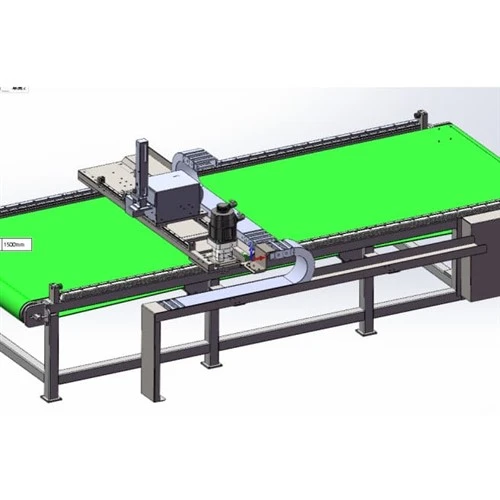
First, let’s cut through the jargon. A flexible complete production line isn’t just a bunch of machines lined up next to each other. It’s a single, integrated system that’s built to handle different products, adjust when something changes, and still keep churning out consistent, high-quality goods—without the hours-long retooling headaches most factories deal with. I’m part of a company that supplies these lines, so I’ve seen first-hand how old-school “hard” lines (you know, the ones that are set for one specific product and can’t touch anything else) are getting left in the dust.
Let’s use a real example. A while back, a client of ours made snack bars—they’d been running the same vanilla flavor line for three years, and every time they wanted to test a new chocolate almond variety, it took them 8 hours to swap parts, calibrate, and get back up to speed. They were losing thousands in downtime every time they ran a small batch of a new flavor. We installed a flexible line for them, and now? They can switch between vanilla, chocolate, even a limited-edition matcha bar in under 90 minutes. That’s not a gimmick—that’s real money saved, and way faster time to market for new products.
So what makes a line “flexible” vs. just automated? Automation is about doing the same thing faster. Flexibility is about doing different things. Let’s break down the key parts of a flexible complete production line, from a supplier’s perspective (no sales pitch fluff, promise):
First, modular machinery. Every part of the line isn’t bolted down permanently. You’ve got conveyor belts that can adjust length, robotic arms with quick-change end effectors (instead of a gripper that only grabs one shape, these switch out in seconds), and molding machines that can reprogram on the fly instead of requiring a whole new mold. We design every module to work with the rest—no weird compatibility issues, because we build them all to talk to the same central software.
Then there’s the control system. This is the brain. Old lines run on a single program that does one thing. Our lines use cloud-connected (or on-site, if you’re paranoid about uptime) software that lets you input a new product spec, and it automatically adjusts every machine’s settings. Need to make the snack bar a little smaller? Input the new weight, and the cutting station, wrapping machine, and even the labeling unit all tweak themselves. No manual adjustments, no guessing if one machine is out of sync with another.
Wait, and let’s not forget data. A lot of flexible lines have built-in sensors that track every part—how fast a conveyor is moving, if a robot is picking up the right number of items, even if a seal on a package is weak. That data isn’t just for quality checks; it’s for flexibility. If you get a last-minute order for 10,000 extra of a certain product, the line can reroute materials without shutting down. We had a beverage client that used this during a holiday rush last year—they added 15% more of their seasonal soda, and the line adjusted in 2 hours instead of the usual day.
But here’s the thing: a flexible line isn’t just for big factories. Some small to mid-sized manufacturers think, “That’s too expensive for me,” but honestly, it’s the opposite. Old lines cost you money every time you switch products, run a small batch, or have to throw away parts because a machine can’t adapt. We’ve helped a craft sauce maker (they make hot sauce and salad dressings) swap between 3 different products in 45 minutes, when before it took 4 hours. Their small batches used to be a money loser, now they’re profitable because they can test new flavors without breaking the bank.
Common myths, let’s bust those right now. Myth 1: Flexible lines are less efficient than hard lines. No, modern flexible lines run at almost the same speed as a hard line when it’s running one product, and way more efficient when you’re switching products or running multiple lines. Myth 2: They’re complicated to operate. We train your team hands-on, no fancy coding required. The control system has a simple interface, like a phone app—you select the product, hit “run,” and it does the rest. Myth 3: They’re only for high-tech industries. We supply lines for food, pharmaceuticals, cosmetics, even small parts manufacturing—if you have a product that changes often, a flexible line works.
Now, why work with a supplier for a complete line instead of buying machines piecemeal? Because if you pick 5 different machines from 5 different companies, they might not talk to each other. We build every module to integrate seamlessly, so you don’t have to mess with adapters, custom code, or troubleshooting a weird communication error. Plus, we handle the install, training, and ongoing support. If a machine has a problem, we don’t send a technician who knows only conveyor belts—we send someone who knows the entire line, front to back.
I get it, making the switch can feel overwhelming. You might be thinking, “We’ve run our old line for 20 years, why change?” But ask yourself: when was the last time you launched a new product without weeks of downtime? When was the last time a big order came in, and you had to turn it down because your line couldn’t adjust? Flexible lines aren’t just a trend—they’re how you stay competitive when customers want custom products, small batches, and fast turnaround.
Here’s the kicker: a flexible complete production line pays for itself. Let’s do quick math. If your current line costs you 10 hours of downtime a week, at $5,000 an hour in lost production? That’s $260,000 a year. A good flexible line might cost $500,000, but you’ll make that back in less than two years, and then it’s pure profit. And that’s before you count being able to charge more for custom products, or launching new lines without a huge capital outlay.
Wait, let’s not make this all about money. For factory teams, flexible lines mean less burnout. No more working 12-hour shifts on weekends to retool. No more manually adjusting 10 different machines at once. It’s easier on your workers, too—because the line does the repetitive, tedious work, and your team can focus on making the products they care about, not just swapping parts.
So, if you’re reading this, and you’re nodding along because that’s exactly the problem you’re dealing with, let’s connect. I can walk you through a quick assessment of your current line—no obligation, no sales pitch. We’ll look at what products you make, how often you switch, and where you’re losing money, and show you exactly how a flexible complete production line would work for you. You don’t have to figure this out alone.
Before I go, a quick note for the tech folks who are reading: when we design these lines, we follow ISO 9001 standards for quality control, and we build in scalability. In a year, if you want to add a new module to make a different product, it’s as simple as plugging it in. No need to replace the whole line. That’s the real flexibility—building for where you are now, and where you want to go next.
At the end of the day, production isn’t just about making things—it’s about making the right things, when people need them. A flexible complete production line lets you do that, without the headaches. If you’re ready to stop fighting your line and start working with it, reach out to discuss your specific needs. We’ll help you build something that fits your shop, your products, and your bottom line.
3D Laser Cutting Machines References
- Industry 4.0: Flexible Manufacturing Systems for Modern Production, International Journal of Production Research, 2022.
- The Economic Impact of Flexible Production Lines on Small to Mid-Sized Manufacturers, Manufacturing Insights Report, 2023.
- Modular Machinery Integration for Turnkey Production Systems, Journal of Manufacturing Technology, 2021.
Yongkang City Bohong Intelligent Equipment Co., Ltd.
As one of the most reliable complete production lines manufacturers and suppliers in China, we also support customized service. With abundant experience, we warmly welcome you to buy advanced complete production lines from our factory. If you have any enquiry about quotation, please feel free to email us.
Address: No. 176 Yinggui North Road, Chengxi New Area, Yongkang City, Zhejiang Province
E-mail: bohonglasertech@Outlook.com
WebSite: https://www.bohonglasertech.com/
