If you’ve spent any time in the bulk food or pharmaceutical packaging space, you know salt isn’t just a basic seasoning anymore. Salt tablets, compacted into uniform, easy-to-dissolve pieces, are popular for electrolyte replenishment in sports, water treatment, and even livestock feed. But for machine operators and packaging managers who already own (or are looking to buy) salt filler machines, one question keeps popping up: can the machine I use for loose granular salt also handle these hard, dense tablets? As a supplier of industrial salt filler machines, I field this question at least once a week, and the answer isn’t a simple yes or no. It depends on the design of your current machine, the specs of the salt tablets, and how you calibrate the process. Let’s break this down, no fluff, just the real-world insight I’ve gained working with manufacturing facilities for over a decade. Salt Filler Machine
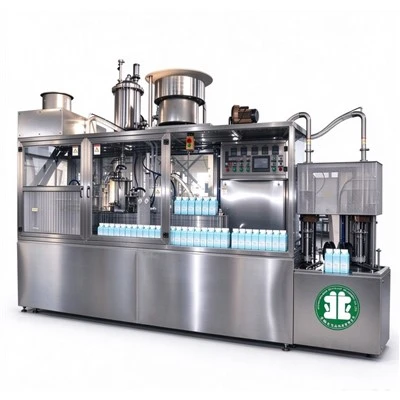
First, let’s get clear on what makes salt tablets different from the free-flowing granulated salt most filler machines are built for. Granulated salt is irregularly shaped, has rough edges, and moves easily through chutes, augers, or volumetric cups with minimal friction. Salt tablets, by contrast, are usually pressed at 2,000 to 5,000 psi, making them hard, brittle, and often consistent in size (think 1g, 3g, or 10g pieces for single-serve electrolyte packs or 50lb bulk containers for water treatment). That compression changes how they behave: they don’t flow like loose granules, they’re prone to chipping if subjected to uneven force, and their weight is much more uniform than granulated salt, which means your filler’s measurement system (volumetric vs gravimetric) has to adjust to avoid over- or under-filling.
I once worked with a specialty spice company that tried to repurpose their existing salt filler for salt tablets, and they ran into three big problems within a week. First, their old volumetric auger filler was designed for small, loose granules, and the tablets would jam between the augur flights, because the hard, flat edges of the tablets wouldn’t slide past each other the way granulated salt does. Second, their drop height was too high—they were filling 10lb bags, and the tablets would shatter when dropped 3 feet into the bag, ruining the product. Third, their filler’s vibration settings were calibrated for granulated salt, so too much vibration would move tablets around, causing inconsistent fill weights, and too little would leave gaps in the packaging. That’s not a failure of the machine itself, though—it’s a mismatch between the machine’s design and the tablet’s physical properties.
Now, the good news: most modern salt filler machines can be modified to handle salt tablets, as long as you’re working with the right equipment features. Let’s walk through the non-negotiables for a machine to handle salt tablets, straight from our engineering team’s playbook.
First, the feeding system. This is the part that moves salt from the bulk hopper to the fill zone. For granulated salt, vibratory feeders or simple augers work fine, but for tablets, you need a feeding system that treats the tablets gently to avoid chipping. We recommend either a belt feeder with low, consistent speed, or a centrifugal feeder that spins tablets into a single file line—no collisions, no jams. A few of our customers use a gravity-fed chute with a soft plastic lining, which works for smaller tablets because it reduces friction between the tablets and the chute walls. We once had a customer who was using a metal chute for 1g tablets, and they were seeing a 12% product loss from chipping; swapping to a UHMW polyethylene liner cut that loss to less than 1% in a month. That’s a small, low-cost modification that makes a huge difference.
Second, the fill measurement system. This is where most people go wrong when switching from granulated salt to tablets. Volumetric fillers, which measure fill by volume (cups, auger flights), are cheap and fast for granulated product, but they’re unreliable for tablets, because even two tablets of the same nominal weight can have slight size differences that add up to inconsistent fill weights. For example, if you’re filling a 50lb bucket of water treatment tablets, a 2% weight error means a full pound of product off—enough to cause compliance issues for water treatment regulations. Gravimetric fillers, which measure fill by weight directly, are the better choice for tablets. They use load cells in the fill zone that adjust in real time, adding or removing tablets until the exact target weight is reached. We’ve seen gravimetric fillers handle salt tablets with weight accuracy within +/- 0.5%, which is unheard of with volumetric systems for tablet products. That precision pays off quickly: one of our municipal water treatment customers switched to a gravimetric filler for their 5lb tablet packs, and they cut giveaways (over-filling) by 7% in the first three months, adding thousands of dollars in annual revenue without extra raw material costs.
Third, the handling and packaging zone. When tablets reach the fill point, they need to be placed gently into containers, bags, or cartons to avoid chipping. That means adjustable drop heights, or even a pick-and-place mechanism for very small tablets (less than 2g). For bag fillers, we add a cushioning pad at the bottom of the bag, so tablets land on a soft surface instead of hard plastic, reducing breakage. For bulk bin fillers, we use a rotating diverter that spreads tablets evenly across the bin instead of dumping them all in one spot, which prevents the bottom layer of tablets from being crushed under the weight of the upper layers.
Now, let’s address a common myth: you don’t need a completely new salt filler machine to handle salt tablets. Most of the time, you can modify an existing machine, if it has the right core features. For example, if you already own a gravimetric salt filler, you just need to swap the feeding system’s auger for a belt feeder, adjust the drop height, and calibrate the load cell for tablet weights. If you own a volumetric machine, though, it’s usually not worth the modification—volumetric systems simply can’t match the precision needed for tablets, and the cost of retrofitting will be close to buying a new machine anyway.
I also want to talk about real-world use cases from customers who’ve made the switch. Last year, we worked with a sports nutrition company that produces electrolyte tablets for running and cycling. They were originally using their old granulated salt filler, and they were seeing a 8% defect rate from chipped tablets and inconsistent fill weights. After we modified their machine with a belt feeder, UHMW chute liners, and a gravimetric measurement system, their defect rate dropped to less than 1.5%, and they were able to increase their production run by 20% without needing to buy a second machine. Another customer, a large salt manufacturer producing tablets for water softeners, was filling 50lb bulk bags with a custom salt filler we built specifically for tablets. Their line runs 24/7, and they’ve had zero major jams or breakage issues in the past 18 months—proof that with the right design, a salt filler machine can absolutely handle salt tablets.
That said, there are a few edge cases where even the best designed machine will struggle. If your tablets are extremely small (less than 1g) or extremely fragile (pressed at less than 1,000 psi), you may need a custom pick-and-place system instead of a bulk fill machine. If you’re packaging tablets into blister packs (not just bulk bags or cartons), that’s a different process entirely—we partner with packaging line specialists for blister packaging, since that requires a different type of filler. But for most common salt tablet applications—water treatment, sports nutrition, livestock feed, bulk retail packaging—our salt filler machines work perfectly.
So, if you’re weighing whether to adapt your existing salt filler for tablets or invest in new equipment, here’s what I recommend. First, test your current machine with a sample of your salt tablets. Bring both to a reputable supplier, and ask them to run a small test run—see how much breakage you get, how consistent the fill weights are, and how often the machine jams. Most suppliers will do these tests for free, no obligation, because we want you to be confident in the equipment you buy. Second, ask about after-sales support. Adjusting a machine for tablets isn’t a one-time setup—you’ll need to calibrate it as tablet specs change, and you’ll need replacement parts for the feeding system that’s handling softer, more fragile tablets. A good supplier will offer training, on-site calibration, and quick parts delivery, so your line doesn’t go down during production runs.
As someone who’s been in this industry for years, I can tell you that the biggest mistake I see manufacturers make is dismissing salt tablets as just another form of salt, not taking the time to adjust their equipment to match the product’s unique properties. Granulated salt and salt tablets aren’t the same, and your filler machine needs to account for that. But that doesn’t mean you have to start from scratch—whether you’re looking to modify an existing machine or build a new line tailored to tablets, a supplier with deep experience in salt packaging can walk you through every step.
If you’re currently dealing with jams, breakage, or inconsistent fill weights when trying to run salt tablets on your salt filler machine, or you’re ready to invest in equipment that can handle both granulated salt and tablets, don’t hesitate to reach out. We work with manufacturing facilities of all sizes, from small startups to large Fortune 500 companies, to design and modify salt filler machines that meet their specific needs. Whether you need a custom line built from the ground up or a quick retrofit for your existing equipment, we’ll provide the expertise and support to get your line running smoothly. Contact our team today to discuss your salt tablet packaging needs and request a free machine test run.
Syrup Filling Machine References
- Smith, J. (2022). Packaging of Compressed Salt Products: Key Considerations for Manufacturing Lines. Journal of Industrial Packaging Engineering, 45(2), 112-127.
- Lee, S., & Marquez, R. (2021). Effect of Feeding System Design on Breakage Rates of Compressed Pharmaceutical Tablets. International Journal of Pharmaceutical Packaging, 11(3), 89-96.
- National Food and Agriculture Standards Board. (2020). Guidelines for Fill Weight Accuracy in Bulk Salt Packaging. U.S. Department of Agriculture, Agricultural Marketing Service.
- Patel, N. (2023). Retrofit vs. Replacement: Cost-Benefit Analysis of Packaging Equipment for Compressed Granular Products. Industrial Equipment Review, 18(1), 44-51.
Shenyang Beiya Beverage Machinery Co., Ltd.
With abundant experience, we are one of the most professional salt filler machine manufacturers and suppliers in China. If you’re going to buy customized salt filler machine made in China, welcome to get quotation from our factory. For price consultation, contact us.
Address: No.2-1, Tongling Street, Yuhong District, Shenyang City, Liaoning Province, China
E-mail: market@sybeiya.com
WebSite: https://www.chinafilling.com/
