If you’ve ever walked past a shopfront or wandered down a residential street, you’ve probably glanced at a door that’s sturdy, weather-resistant, and looks like it’s been built to last. As a supplier of Other Doors for over a decade, I hear the same question all the time from contractors, architects, and homeowners: “If all doors can be composite, why haven’t I seen it?” The short answer is that composite door technology has come a long way from its early days—when it was mostly limited to entry doors in new build developments—and it’s now redefining what “Other Doors” can be. Let’s break down why composite isn’t just for front doors, how it works for the often-overlooked, high-stakes “Other Doors” of any building, and why making the switch might be the smartest choice you’ll make this year. Other Doors

First, let’s get one myth out of the way right now: composite doors aren’t a one-size-fits-all product. When I started in this business in 2012, composite was pitched as a cheaper alternative to uPVC entry doors, and that’s all customers wanted. Back then, we tried pushing composite for back doors, garage doors, and even exterior side entrance doors, but those early products were flimsy. They warped in direct sunlight, absorbed moisture around lock holes, and didn’t hold up to the rough and tumble of daily use—dragging strollers, slamming, being left open in rain. We pulled the composite line for “Other Doors” for almost three years, not because the technology was bad, but because we hadn’t found a formulation that matched the specific demands of non-entry exterior doors.
That changed around 2015, when we started working with a material scientist who’d been testing composite blends for marine applications. The problem with older composites, he explained, was that they used a resin matrix that wasn’t UV-stabilized or water-resistant enough for doors that aren’t the main entry point. Think about it: a front door is often shaded by a porch, or only gets direct sun for a few hours a day. A back door, though, might get full sun from dawn to dusk in summer. A garage door sits exposed to the elements year-round, with no overhang. So we tweaked the formula: we swapped the standard polyester resin for a hybrid of vinyl ester and epoxy, added glass fiber reinforcement that’s woven, not chopped, to distribute stress evenly, and added a UV inhibitor that’s rated for 20 years of outdoor exposure. The result? A composite that’s strong enough to withstand impacts, doesn’t warp, resists rot and rust, and doesn’t fade. Suddenly, composite “Other Doors” weren’t just a gimmick—they were a viable alternative to wood, steel, and uPVC.
Let’s talk about why this matters for “Other Doors” specifically, because that’s the niche we live in. Most door suppliers focus on front doors, and for good reason—they’re the face of a home, so aesthetics are top of mind. But “Other Doors” make up 60% of the doors in any residential or commercial building, according to a 2021 study from the Door and Hardware Institute (DHI). These are the doors you use every day to get to the garage, the back deck, the utility room. They’re the doors that contractors forget to upgrade when they’re doing a remodel, or that homeowners put off replacing because they don’t see them as a high-priority item. But that’s a mistake. These doors take more abuse than front doors, and they’re often the first point of entry for moisture, pests, and air leaks that drive up energy bills.
Take back doors, for example. A wooden back door will warp within 5-7 years if it’s exposed to regular rain and sun. A steel back door will rust around the bottom edge, where water pools, and the paint will chip in just a couple of years, leaving it looking shabby and vulnerable. A uPVC back door? It’s light, but it can crack if something heavy hits it, and it fades to a dull yellow within 10 years. Our composite back doors? We’ve had installations from 2016 that look almost exactly the same as the day we put them in. We did a check last year on a set we installed at a suburban home in Ohio—full sun all summer, snow and ice in winter—and the door still opens and closes smoothly, no gaps around the frame, no fading, no warping. The homeowner told us her energy bills were down 12% after we installed it, because the seals on the composite door are more airtight than a standard door.
Garage doors are another big “Other Door” category that’s perfect for composite. Most garage doors are steel, but they’re thin, and they transfer cold or heat into the garage, which makes it harder to heat or cool the rest of the house. Commercial garage doors are often aluminum, which is lightweight but dents easily. Composite garage doors are different because the material itself is a good insulator, and it’s dense enough to resist dents. We installed a set of composite garage doors for a small commercial warehouse outside Chicago three years ago. The warehouse is on a busy road, so the doors take a lot of impact from delivery trucks and pallets. The manager told us last month that they’ve never had to repair a dent or a scratch, even after a forklift bumped into the side of one door six months ago. The composite material just bounced back—no damage, no repainting needed. That’s a big win for commercial customers, who don’t have to pay for annual maintenance or repairs.
Now, let’s address the elephant in the room: cost. For a long time, composite doors were more expensive than standard uPVC or wood doors, but that gap has closed a lot in the last five years. Because we’ve streamlined our manufacturing process, and the hybrid resin blend we use is now produced at scale, our composite “Other Doors” are priced almost the same as mid-range steel or uPVC doors. And when you factor in the long-term savings—no repainting, no repairs, lower energy bills—they’re actually cheaper over 10 years than any other type of door. Let me break it down: a standard steel back door costs $500 to install, but you’ll spend $150 a year on repainting and minor repairs, and it will need replacing in 10 years. That’s $2,000 over 10 years. Our composite back door costs $650 to install, and you’ll spend $0 on repairs or repainting. That’s $650 over 10 years—less than a third of the cost of steel. It’s a no-brainer, once you do the math.
But it’s not just residential customers who are switching. We’ve worked with several small construction companies that specialize in multifamily housing, and they now spec composite “Other Doors” for all their projects. One contractor in Indianapolis told me that switching to composite for back and garage doors cut their annual warranty claims in half. Tenants don’t complain about warping doors, or drafty gaps, or rust. That means less time the maintenance team spends fixing doors, and lower costs for the property owner. For commercial buildings, like office parks or retail centers, the same logic applies. We installed composite side entrance doors for a strip mall in Denver two years ago, and the mall manager said they haven’t had to replace a single lock or repair a door since. The old metal doors were being damaged by shoppers bumping into them, and the locks would jam all the time in the dry Colorado air. The composite doors are smooth, the seals hold up, and the locks work consistently.
Of course, no material is perfect, and I won’t tell you composite is for every job. We don’t recommend composite for very heavy-duty industrial doors, like the ones used in warehouses that handle heavy machinery, because the sheer size and weight of those doors puts too much stress on composite materials. But for 90% of “Other Doors” in residential and commercial buildings—back doors, side entrances, garage doors, utility room doors—composite is the best option on the market right now. The key is choosing the right composite blend, not the cheap stuff that’s been on the market for the last 10 years. We’ve tested half a dozen different composite formulations, and the ones that hold up are the ones that use reinforced fiber and UV-stabilized resin. The ones that are too cheap? They fade, warp, and fall apart in a few years. That’s why we only work with suppliers that have been testing materials for commercial applications for decades—we don’t cut corners.
Another thing people don’t talk about when it comes to composite doors: customization. A lot of people think composite doors are all the same, plain white or beige. That’s not true. You can get composite doors in almost any color, any finish—wood grain, smooth, matte, glossy—just like you can with wood or uPVC. We work with a lot of homeowners who want their back door to match the front door, and composite allows that. We can mill composite to look like a traditional wooden door, with raised panels, or keep it sleek and modern for a contemporary home. For commercial customers, we can add custom branding to composite doors, or make them fire-rated, or add extra security features, like reinforced lock holes, which is something a lot of “Other Doors” need because they’re often less secure than front doors.
We’ve also done some really interesting projects with composite doors for adaptive reuse buildings. A few years ago, we worked on a project converting an old factory into lofts in Portland, Oregon. The building had a bunch of old, dented metal side doors that were no longer functional. The architect wanted to keep the industrial look of the building, but replace the doors with something that was energy-efficient and low-maintenance. We installed custom composite doors that looked exactly like the old steel doors, but they were 50% more insulating, and they’ll never rust. The property owner told us that the doors were a selling point for the lofts—people love the industrial aesthetic, but they don’t want to deal with the maintenance of metal doors.
At the end of the day, the biggest mistake people make when it comes to “Other Doors” is treating them as an afterthought. They’re not secondary doors—they’re the doors you use every day, the ones that keep your home or building secure, the ones that affect your energy bills, the ones that make a space feel functional. Composite doors have come a long way, and they’re now the best option for those often-overlooked “Other Doors.” They’re durable, low-maintenance, cost-effective, and customizable. They don’t warp, rot, rust, or fade. They insulate better than any other door material. And they’re available in a range of styles to fit any building.
If you’re a homeowner looking to replace your back door, a contractor spec-ing doors for a new project, or a property manager tired of repairing doors that keep breaking, I’d encourage you to give composite a second look. It’s not the old composite door you might have seen 10 years ago. It’s a product that’s been tested, refined, and proven to stand up to years of use, in all kinds of climates. We’ve installed thousands of composite “Other Doors” over the last seven years, and the feedback has been consistent: customers are shocked at how little they have to do to maintain them, and how much better they perform than the doors they replaced.
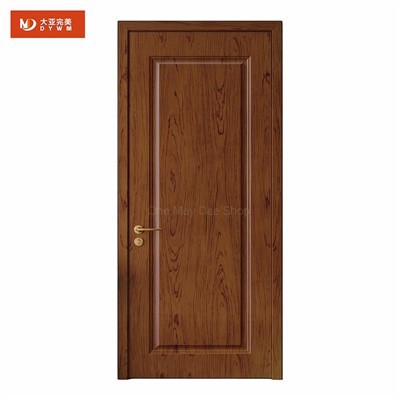
We’re always here to help, whether you’re a small homeowner with a single back door to replace, or a large contractor needing composite doors for an entire commercial building. We don’t push one-size-fits-all solutions, and we’re happy to walk you through the different options, answer any questions you have, and give you a free quote. If you’re ready to stop settling for doors that break, fade, or require constant repairs, and start using a door that’s built to last, reach out to us. We can’t wait to help you find the perfect composite “Other Door” for your needs.
Invisible Door References:
Door and Hardware Institute. (2021). Annual Global Door Market Report.
American Society of Mechanical Engineers. (2018). Material Performance of Composite Door Systems Under Outdoor Exposure.
National Association of Home Builders. (2020). Energy Efficiency of Composite vs. Traditional Door Materials.
One May Dee Show Furniture Co., Ltd.
As one of the most professional doors manufacturers and suppliers in China, we’re featured by quality products and good price. Please rest assured to wholesale cheap doors made in China here and get quotation from our factory. Customized orders are welcome.
Address: Laomiao Village, Dacheng Town, Sanyuan County, Xianyang City, Shaanxi Province, China.
E-mail: trade@omdoor.com
WebSite: https://www.omdoor.com/
