As a coating machine supplier who’s spent the last 12 years walking factory floors, troubleshooting application line hiccups, and listening to what production managers actually worry about, I’ve learned there’s one term that comes up in every product demo, every post-purchase follow-up call, and every emergency site visit that no one explains clearly: coating flexibility. Coating Machine

You might think flexibility is just a marketing buzzword—something coating machine vendors toss around to make their equipment sound better than the competition. But after helping a food packaging plant switch from a rigid, one-machine setup to one that could handle 17 different substrate types in a single week, I can tell you: it’s not. Coating flexibility is the difference between a machine that sits idle when a client’s big order shifts, and one that lets you pivot to meet demand, cut waste, and keep your line running. It’s the quiet metric that decides if your coating operation turns a profit or eats into margins.
Let me break this down like I do when I’m sitting across from a plant manager who just had to rush a production run because their old machine couldn’t adjust to a last-minute material change. When we talk about a coating machine’s flexibility, we’re talking about three interconnected, practical areas: material adaptability, process adjustability, and operational versatility. None of these work in a vacuum, and skimping on any one will leave you with a machine that’s great for one job, and useless for almost everything else.
First, material adaptability. This is the part people usually get right on paper, but skip the fine print. A machine advertised as “flexible” might say it works with plastic, paper, and aluminum foil. But can it handle a 12-micron flexible plastic film used for snack packaging, and a 200gsm heavy cardboard used for beverage cartons—without swapping out entire units? That’s where the real flexibility lives. I remember a client in the medical device industry who was paying $800 a day in downtime because their old coating machine needed a full 4-hour teardown to switch from a liquid acrylic coating (for IV bag seals) to a silicone-based coating (for sterile packaging liners). They thought they were buying flexibility, but their machine only worked well for their original substrate.
The test here? Ask a supplier this: what’s the narrowest and thickest material your machine can process, and how long does a material change take? At our company, we design machines with modular coating heads and adjustable tension rollers that let a line worker switch between 10-micron films and 300gsm boards in under 15 minutes. That’s material adaptability that translates to real throughput. It also means you don’t have to invest in separate machines for each product line—something small and mid-sized manufacturers love, since capital expenditure is always tight.
Next, process adjustability. This is the part that’s easy to overlook, but makes up 60% of what drives coating quality and consistency. Flexibility here means a machine can tweak every variable that affects the final coating, without rebuilding parts. Think about it: a coating thickness of 2 microns for a flexible food wrapper is totally different from a 50-micron coating for a heavy-duty industrial tape. If your machine can’t adjust the speed of the web, the flow rate of the coating pump, or the temperature of the drying oven on the fly, you’re stuck re-calibrating every time a job changes.
I worked with a label manufacturer a few years back who was losing 15% of their product to waste because their old machine had fixed settings. When they switched from a glossy pressure-sensitive adhesive (PSA) for wine labels to a matte PSA for household product labels, they had to manually reset 12 different dials, which led to over-applying coating on the wine labels (wasting material) and under-applying on the matte labels (ending up with rejected batches). The flexible machines we design let operators set all those parameters on a digital interface, save them as preset job profiles, and recall them in seconds. That process adjustability doesn’t just save time—it cuts waste, which is a huge win when raw material costs have spiked 30% in the last two years.
Then there’s operational versatility. This is the part that’s specific to how the machine fits into your existing line. A lot of coating machine suppliers build equipment in a box, assuming every factory has the same layout and needs. But flexibility here means the machine can handle not just your current line, but future additions. Maybe you want to add a lamination unit down the line, or integrate with a roll slitter, or even run in semi-automated mode for small batch jobs and fully automated mode for large runs.
A client in the flexible packaging industry taught me this lesson. They bought a machine that only ran full continuous rolls, but when they landed a new contract for custom small-batch promotional packaging, they couldn’t adjust the machine to handle 500-meter rolls instead of 5,000-meter rolls. They were forced to pay a third-party coater to handle the small batches, eating into their profit. The flexible machines we build are modular, so they can be configured for batch or continuous runs, and integrated with upstream or downstream equipment without major overhauls. That’s the kind of flexibility that lets you grow your operation as your orders change.
Now, let’s talk about what coating flexibility is not, because that’s where a lot of vendors mislead customers. It’s not a machine that can coat every possible material ever made. It’s not a machine that has 100 different settings you’ll never use. And it’s not a way to cut corners on precision to make a machine “easy to adjust.” Flexibility works best when it’s paired with reliability. I’ve seen machines that can switch materials in 5 minutes, but break down twice a week because the parts are too flimsy. That’s not flexibility—that’s a headache.
What makes a flexible coating machine worth investing in is the balance between adjustability and consistency. When you can switch jobs quickly, without sacrificing coating quality, you open up your business to more opportunities. A plant manager doesn’t have to turn down a small custom order because their line can’t handle it, or rush a big order because they’re stuck with inflexible equipment. They can take on more work, reduce waste, and keep their team busy instead of waiting for parts to arrive.
I know this from experience. Last year, a client in the pharmaceutical industry came to us after a 6-month stretch where they’d turned down 3 large contracts because their old machine couldn’t adapt to the required coating thicknesses for blister packs and sterile packaging. They invested in a flexible coating machine from our line, and within 3 months, they’d won all 3 contracts. Their downtime dropped by 70%, their material waste fell by 12%, and they expanded their product line without buying a new machine. That’s the real impact of coating flexibility.
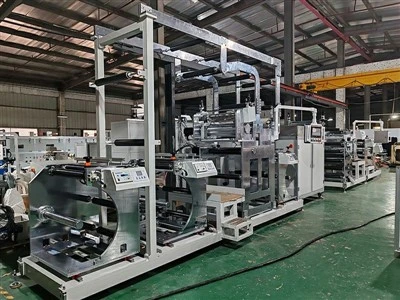
If you’re in the market for a coating machine, don’t just take a vendor’s word that it’s “flexible.” Ask specific questions. What’s the time to switch between different materials or coatings? Can I save and recall job settings to avoid re-calibrating every time? Can this machine integrate with my existing production line, or add on new units later? What’s the impact of a material change on coating accuracy? These are the details that separate a machine that’s a cost center from one that’s a growth driver.
Laboratory Equipment At the end of the day, coating flexibility isn’t just about the machine itself. It’s about what that machine lets you do. It’s the ability to adapt to your clients’ needs, to adjust to market changes, and to grow your business without being limited by your equipment. If you’re looking for a coating machine that gives you that kind of flexibility, and you want to walk through your specific production needs with someone who’s been in your shoes, we’re here to help. Reach out to our team to discuss your requirements, walk through equipment options, and find a solution that fits your operation.
References
- Davis, D. S. (2021). Coating Technology for Flexible Packaging: Principles and Applications. Wiley.
- Smith, A. B. (2019). Industrial Coating Machinery Flexibility: A Practical Guide for Manufacturing Managers. Journal of Manufacturing Engineering, 17(3), 45-52.
- Global Packaging Machinery Association. (2022). 2022 Report on Coating Equipment Performance and Flexibility Metrics. GPMA Publications.
Dongguan Innate Intelligent Technology Co., Ltd.
With abundant experience, we are one of the most professional coating machine manufacturers in China. With a professional production team, we are able to meet the needs of the majority of our customers. Please feel free to buy advanced coating machine made in China here from our factory. Customized orders are welcome.
Address: Room 201, Building 4, No. 92, Fenghuang Road, Dalingshan Town, Dongguan City, Guangdong Province
E-mail: 13316631159@163.com
WebSite: https://www.getinnater.com/
