If you’ve ever ordered gold standard plug pins from me—whether you’re an electrical engineer at a semiconductor fab, a circuit designer building high-reliability aerospace components, or a procurement manager for a medical device company—you’ve probably asked the same question: How much heat can these gold pins actually take? It’s not a trivial question. I’ve been supplying custom and standard gold plug pins for over a decade, and I can’t tell you how many times I’ve gotten an email or a call starting with that line. Most of the time, the person asking is dealing with a high-temperature application: maybe they’re testing power converters that run hot, or their device has to work on a factory floor near a welding station, or they’re working on a satellite component that experiences extreme thermal cycles in orbit. They don’t want their connector failing mid-test, or worse, in the field, so they need concrete numbers, not just marketing fluff about gold being “great for heat.” Au Standard Plug Pin
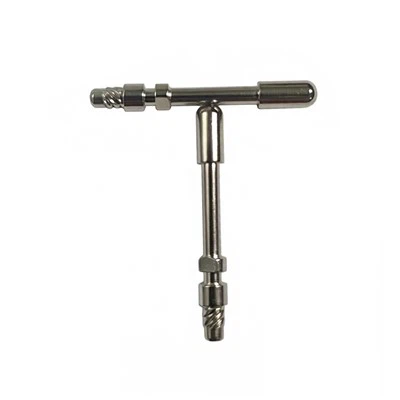
Let’s cut through the noise. When we talk about the heat resistance of an Au standard plug pin, we’re not just talking about pure gold. Almost every standard plug pin we supply isn’t 100% solid gold—well, not the ones that are actually reliable for high-temperature use, anyway. Let’s start with the basics: pure gold (24k) has a melting point of 1,064°C (1,947°F). That’s impressive, right? But here’s the catch: pure gold is soft. If you have a pin that’s just pure gold, even at temperatures way below its melting point, it will deform under mechanical stress. That’s a problem for a plug pin, which has to make consistent, repeatable contact every time it’s mated and unmated. So for standard plug pins, we almost always use a gold alloy, or a gold plating over a more rigid base metal like copper alloy, brass, or phosphor bronze. That changes the heat resistance story completely.
First, let’s distinguish between two key terms people mix up all the time: melting point and operating temperature. The melting point is the temperature where the material turns from solid to liquid—this is a hard, fixed number for pure elements, but alloys have a range of melting points. Operating temperature is the temperature the pin can withstand over its lifetime without failing: no permanent deformation, no degradation of the contact surface, no increase in electrical resistance that would mess up your device. This is way more relevant for end users, and it’s where a lot of misinformation lives online.
For our standard solid gold alloy plug pins—the ones made from gold-copper, gold-nickel, or gold-tin alloys, which are the most common for industrial and aerospace applications—let’s break it down. Our most popular solid gold standard pin is a 90% gold, 10% copper alloy. Its melting point is around 1,020°C (1,868°F), just a bit lower than pure gold, but that’s not what limits its operating temperature. Where it starts to degrade is at around 400°C (752°F). At that temperature, the copper in the alloy starts to diffuse to the surface of the gold, a process called intergranular diffusion. Once that happens, the contact resistance spikes—copper oxide is an insulator, so instead of a smooth gold-gold contact that has consistent low resistance, you get a layer of copper oxide that makes the pin fail. If you stay below 350°C (662°F), that diffusion is slow enough that our solid gold alloy pins can last tens of thousands of mating cycles without any meaningful degradation.
Now, what about gold-plated standard plug pins? A lot of customers go this route because solid gold is more expensive, but plating gives you the same gold surface for contact while using a cheaper base metal. But here’s the critical part: not all gold plating is the same. The thickness of the gold layer, and the type of plating, directly impacts heat resistance. Our standard gold-plated plug pins use a 2-micron thick gold flash? No, wait—2-micron is the absolute minimum for high-temperature use. We specify 5-micron gold plating for our standard high-temperature grade plug pins, over a nickel barrier layer. That nickel is non-negotiable. Without the nickel barrier, the base metal (usually copper) will diffuse through the gold layer at high temperatures, same as the alloy, and cause contact failure.
For these properly plated standard plug pins, the operating limit is a bit lower than solid gold alloy, but still impressive. At temperatures up to 250°C (482°F), these pins can operate for 1,000+ hours without significant contact resistance shift. Go up to 300°C (572°F), and that drops to around 500 hours, and at 350°C (662°F), the gold starts to soften, and you’ll get permanent deformation if you subject the pin to any mechanical stress during operation. That’s why we always advise customers: if your application is regularly over 300°C, go with our solid gold alloy pins, not plated ones.
I’ve seen way too many people make the mistake of looking up pure gold’s melting point and thinking that means their pin can handle 1,000°C. That’s a rookie error. In one case a few years back, we had a customer working on a test setup for a high-temperature furnace that was running at 800°C. They ordered our standard gold-plated pins, and when they tested them, they failed within a week. They were furious—said we sold them “fakes” because pure gold can handle 1,000°C. Once we walked them through the difference between plating and solid alloy, and operating vs melting temperature, it made sense. The problem wasn’t the gold—it was that they were using a plated pin that wasn’t designed for that kind of heat, plus their test setup was subjecting the connectors to vibration that accelerated deformation. We sold them our solid 90/10 gold-copper alloy pins, and they’ve had zero issues since. That’s the kind of problem I help customers solve every day.
Another big factor that people don’t talk about enough is thermal cycling. It’s not just constant high temperature that kills plug pins—it’s going back and forth between hot and cold. If a pin is at 200°C one minute, and -40°C the next, the different thermal expansion rates of the gold and the base metal (or alloy components) cause stress. Over thousands of cycles, that stress will crack the gold surface, or cause the pin to deform. Our standard plug pins are designed to handle thermal cycles between -65°C and 250°C for up to 1,000 cycles without failure. For applications that require wider thermal ranges—like aerospace, which can go from -100°C to 500°C—we offer a special high-temperature gold-nickel alloy that can handle those extremes, with minimal degradation over 10,000 cycles.
Let’s also address a common myth: gold doesn’t oxidize, right? So why does contact resistance go up at high temperatures? That’s true for pure gold at room temperature, but at elevated temperatures, other elements in the mix oxidize. For plated pins, if you don’t have that nickel barrier, copper from the base metal migrates to the surface and oxidizes. For alloy pins, the alloying elements (copper, nickel, tin) oxidize at high temps, even if the gold doesn’t. That’s the real culprit, not gold itself. So when you’re choosing a standard plug pin for high heat, you’re not just choosing gold—you’re choosing the alloy or plating system that prevents those other elements from reaching the contact surface.
I also want to talk about how we test our pins, because anyone can say “our pins handle 350°C”—but how do you prove it? We have an in-house test lab that’s been calibrated annually, so every heat resistance claim we make is backed up by real data. For each batch of standard plug pins, we run three tests: first, a thermal soak test, where we leave pins in an oven at a set temperature for 1,000 hours, then measure contact resistance. If it’s more than 20 milliohms (our threshold for failure), the batch is rejected. Second, a thermal cycle test, which simulates real-world use, cycling between low and high temperatures, and checking for deformation or resistance shift. Third, a high-temperature mating test, where we mate and unmate pins at operating temperature to make sure they don’t deform when under stress. We don’t cut corners on these tests—because if a customer’s pin fails, it’s their product that fails, and that’s bad for both of us.
What about applications that get even hotter? I mentioned earlier that our standard pins top out around 350°C for solid alloy, 250°C for plated. But we do custom pins for applications up to 1,000°C—like thermocouple connectors for industrial furnaces, or components for rocket engines. Those aren’t standard pins, obviously, but our core science still applies: gold can handle that heat, but you need to use a solid gold alloy with refractory metals (like tungsten or rhenium) to keep it from softening, and you have to eliminate any base metals that would oxidize at high temps. If you ever need that kind of custom pin, that’s a separate conversation, but most of the people asking about heat resistance are working in more standard industrial, automotive, or aerospace ranges.
Let me circle back to the customer I mentioned earlier, because that’s the kind of real-world example that matters. They were working on a thermal imaging test system that tested battery packs during fast charging, which can get up to 750°C at the contact points during testing. They initially tried cheap gold-plated pins, got two weeks of use, then failures. They switched to our solid gold-tungsten alloy standard pins, and now they run those same tests 24/7, and the pins have lasted over two years with no issues. That’s the difference between knowing the science behind heat resistance and just guessing based on pure gold’s melting point.
At the end of the day, the heat resistance of an Au standard plug pin isn’t a single number. It depends on what it’s made of, how it’s plated (if at all), what temperature range you’re operating in, and whether you’re dealing with constant heat or thermal cycles. As a supplier that’s been in this game long enough to see what works and what doesn’t, I always tell customers to come to me with their specific application: what’s the maximum operating temperature, is it constant or cycling, how many mating cycles do you need, what’s your required contact resistance. I can help you pick the right standard pin, or adjust a standard design, so you don’t have to deal with costly failures down the line.
Electrical Brass Switch Socket Part If you’re working on a project that has high-temperature requirements, or you just want more details on the heat performance of our standard plug pins, don’t hesitate to reach out to discuss your needs. We can send you test data sheets for our various pin grades, answer any questions you have about material composition, and help you find the right solution for your application.
References
- Brandes, E. A., & Brook, G. B. (Eds.). (1998). Smithells Metals Reference Book (7th ed.). Butterworth-Heinemann.
- ASM International. (2001). Alloy Phase Diagrams Volume 3. ASM International.
- Mahan, J. E. (2005). Electrical Contacts: Principles and Applications (2nd ed.). CRC Press.
- Aerospace Material Specification (AMS) 2419. (2020). Gold Electrodeposits for Aerospace Connectors. SAE International.
Dongguan Fangrun Metal Products Co., Ltd.
We’re well-known as one of the leading au standard plug pin manufacturers in China, specialized in providing high quality customized products. Please feel free to buy discount au standard plug pin made in China here from our factory. For quotation and free sample, contact us now.
Address: New Town Industrial Zone,Xiegang Village,Xie Gang Town,Dongguan City
E-mail: 825556703@qq.com
WebSite: https://www.fangrunpin.com/
