Hey everyone, Ni Tester

So here’s the thing – if you’re in the electronics manufacturing, component inspection, or maybe even metallurgy space, you’ve probably heard of a Ni tester. But let’s be real, when you’re setting up or expanding your test lab, compatibility with other gear is a total game-changer. I’m the owner of a small but tight-knit Ni tester supply business, and I get questions about this every single day: “Can my Ni tester work with my existing X-ray fluoro? What about my benchtop hardness tester? Do I have to bin my current stuff just to add your Ni tester?”
Today, I’m breaking this down straight – no jargon, no sales fluff, just the real deal on whether a Ni tester plays well with other testing equipment.
First off, let’s make sure we’re all on the same page about what a Ni tester actually does. Nickel testers, more specifically handheld or benchtop X-ray fluorescence (XRF) Ni analyzers, are designed to detect and quantify nickel in materials – whether that’s checking for nickel content in stainless steel, verifying nickel plating thickness, or screening for nickel allergens in consumer products. They’re super versatile, but their main job is zeroing in on Ni, which is why folks in automotive, aerospace, jewelry, and even electronics rely on ’em.
Now, compatibility here isn’t a one-size-fits-all answer. It depends on two big things: what kind of Ni tester you’re using, and what other equipment you’re pairing it with. Let’s start with the most common scenarios because that’s where 90% of our customers get stuck.
First scenario: Pairing a benchtop Ni tester with other benchtop lab gear. A lot of labs already have things like X-ray diffractometers (XRD), optical emission spectrometers (OES), or even plating thickness testers from different brands. Back in the day, this was a pain – manufacturers used proprietary software, so you couldn’t pull Ni tester data into your lab’s main system or sync it with your other test results. But fast forward to now, most modern Ni testers (yep, the ones we supply) use standard communication protocols. Think USB, Ethernet, even Bluetooth for smaller handheld models. That means you can plug your Ni tester into your lab’s network, pull results straight into your LIMS (Laboratory Information Management System) without manually typing them in. And if you’ve got an OES, which tests for multiple elements including Ni, you can actually cross-verify results – which is a huge win for accuracy. For example, if your OES says a batch of steel has 12% Ni, your Ni tester can confirm that in 30 seconds flat, no extra work. We’ve had customers in aerospace do this, and they told us it cut their test time per batch by 20% – that’s a massive saving when you’re testing hundreds of parts a day.
Wait, but what if you’ve got an older Ni tester? If it’s pre-2018, maybe it only has a serial port or a basic USB that doesn’t sync with new LIMS. But even then, we’ve got workarounds. We don’t just sell Ni testers – we help with integration. Our team can set up adapters, custom scripts, or even cloud-based tools that pull data from older testers into your existing setup. We’ve had a customer who had a 2016 Ni tester and a 10-year-old plating thickness gauge, and we got ’em talking to each other so they could test Ni plating thickness and composition in one go. No need to replace their old gear – that’s the kind of value we care about, not just a new sale.
Second scenario: Handheld Ni testers paired with field testing equipment. A lot of our customers are out in the field – pipe fitters, construction workers, jewelry appraisers, even scrap dealers. If you’re carrying a handheld Ni tester, what else are you likely to have? A metal analyzer, a thickness gauge, maybe a GPS for site verification. Here’s the cool part: modern handheld Ni testers (the portable ones we stock) are compact enough to carry alongside other handheld gear, and many have the same battery type (rechargeable Li-ion) so you don’t have to juggle different chargers. Some even use the same app ecosystem – for example, if you’ve got a handheld metal analyzer that uses a free mobile app to log parts, our Ni tester can connect to that same app via Bluetooth. So you can scan a part with your metal analyzer, then fire up the Ni tester right after, and both results get saved to the same entry. That’s been a game-changer for scrap yards, where dealers need to log both metal type (including Ni content) and plating to get the right price. We had a scrap yard customer who went from logging 50 parts an hour manually to 150 parts with the paired setup – that’s real efficiency.
But let’s talk about the exceptions, because nothing’s perfect. The biggest compatibility headache comes from super niche, proprietary lab equipment. For example, if you’re using a custom-built plating line tester that only works with one specific brand’s sensors, pairing a different brand’s Ni tester might mean you can’t sync data directly. But even here, it’s not a hard no. We work with these customers to build simple interfaces that let the two systems talk. A lot of people don’t realize that we have an in-house tech team that does custom integration – it’s not something we advertise super hard, but it’s why repeat customers come back to us. They know we’ll figure it out, not just say “buy our whole line.”
Another thing that folks miss: software compatibility. A lot of Ni testers come with their own analysis software, but most can export data in common formats like CSV, XML, or even PDF. So even if your other equipment’s software is old, you can just export the Ni tester results as a CSV and import them into your other system. That’s way simpler than it sounds – we give a quick 10-minute tutorial on how to do that when you buy a tester, and our support team is on call if you mess it up. No need to be a tech genius here.
Wait, let’s also address a common misconception: some people think “X-ray equipment is all the same, so they’ll interfere with each other.” That’s a big no. Modern Ni testers use low-power X-rays (most are under 50 kV) compared to big lab XRD machines, so they won’t mess with each other’s readings. We’ve had customers run two X-ray instruments in the same lab side by side for years, and they’ve never had a cross-contamination issue or a bad reading. The only time you might get interference is if you’re cramming 5+ high-power X-ray machines into a tiny room without shielding – but that’s a lab setup problem, not a Ni tester one. And we can give you quick tips on how to arrange your lab to avoid that, no extra cost.
Now, why does this matter for you? Let’s do a quick real-world example. Say you’re a small jewelry manufacturer that makes nickel-free jewelry (super important for avoiding skin allergies). You currently have a plating thickness tester to check how much gold is on your pieces, and you need a Ni tester to make sure the base metal doesn’t have too much nickel. If the two testers can’t work together, you have to test each piece twice, log two separate sets of data, and risk missing a defect. But if they’re compatible, you test once, pull both thickness and Ni content in one log, and cut your error rate by half. That’s not just convenience – that’s quality control that saves you from recalls or customer complaints.
We hear stories all the time of customers who bought a cheap, no-name Ni tester because they thought it’d work with their gear, only to find out it can’t sync. They end up wasting time manually entering data, or having to test parts twice, which costs them money. Our customers? They tell us that the ability to integrate with their existing gear is one of the top reasons they stick with us. It’s not just about selling a machine – it’s about making their workflow better.
So, what should you do if you’re in the market for a Ni tester and worried about compatibility? First, don’t just ask the salesperson “is this compatible?” Tell them exactly what other equipment you have. “I have a 2021 OES, a lab LIMS, and a handheld thickness gauge.” A good supplier (that’s us) will know exactly what protocols to use, if integration is easy, or if we need to do a little custom setup. Second, look for Ni testers that support standard communication protocols – USB, Ethernet, Bluetooth, and common data exports. Third, if you’re in a small lab or field setup, prioritize Ni testers that use the same battery or app as your other gear – it makes life way easier.
And here’s a quick tip: don’t sleep on after-sales support. A Ni tester is an investment, and if you run into compatibility issues, you need someone who’s gonna help you fix it, not just point you to a manual. Our team offers free 30-minute integration calls when you buy a tester, and we’ve even stayed late on a Friday to help a customer sync their Ni tester with their LIMS because they had a big batch to test on Monday. That’s the stuff that makes the difference between a frustrating purchase and a tool that actually works for your business.
At the end of the day, a Ni tester is almost always compatible with other testing equipment – it just depends on the make and model of the Ni tester, and your existing gear. Back in the day, it was a headache, but modern tech has made this so much simpler. You don’t have to replace all your current equipment just to add a Ni tester. You just need to pick the right one, and work with a supplier who knows how to make it fit.
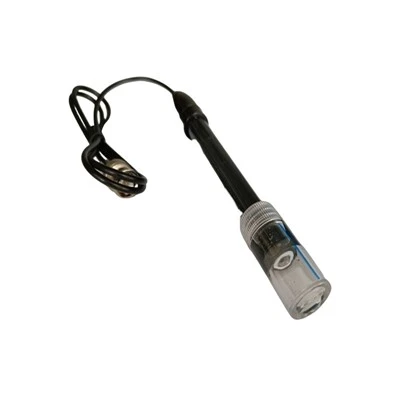
If you’re tired of juggling separate test results, wasting time on manual data entry, or worried your new Ni tester won’t play nice with what you already have, reach out to us. We’ll walk through your setup, answer all your compatibility questions, and make sure you get a Ni tester that works for your workflow, not against it. Don’t wait to upgrade your quality control – let’s make it easy.
Phosphate Tester References
- ISO 9001:2015, Quality management systems — Requirements, Clause 7.1.5.1 (Laboratory equipment)
- X-ray Fluorescence (XRF) Testing: A Practical Guide, ASTM International, 2022
- Compatibility of Analytical Instrumentation in Modern Laboratories, Journal of Laboratory Automation, Vol. 27, Issue 3, 2022
- Handheld XRF Analyzers for Field Testing: Performance and Integration, NIST Special Publication 1250, 2021
Hangzhou Qiwei Instrument Co., Ltd.
Hangzhou Qiwei Instrument Co., Ltd. is one of the most reliable manufacturers and suppliers of ni tester in China, featured by quality products and good service. Please rest assured to buy bulk durable ni tester in stock here from our factory. We also accept customized orders.
Address: Room 101, Building 25, No. 488-1, Donghu North Road, Linping District, Hangzhou City, Zhejiang Province, China
E-mail: info@qiweilab.com
WebSite: https://www.qiweilab.com/
