If you’ve ever visited our facility and watched a ribbon mixer run, you might have noticed something that at first seems trivial: the thin, helical ribbon inside is rotating one way, and you might wonder, does the direction even matter? As a ribbon mixer supplier with 18 years in the industry, I can tell you it matters a great deal—not just for how well powders, granules, or viscous materials mix, but for product consistency, production speed, and even equipment wear. Today, I want to break down exactly how ribbon rotation direction shapes mixing results, and why that detail is critical for anyone who relies on mixers for batch or continuous production. Ribbon Mixer
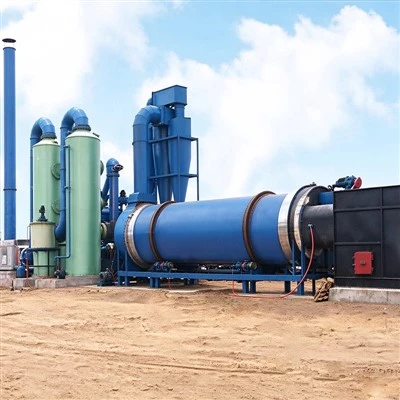
First, let’s ground this in the basics of a ribbon mixer’s design. Most standard industrial ribbon mixers have two concentric helical ribbons: an outer, wider ribbon and an inner, narrower ribbon. Each is fixed to a central shaft that spins at a set speed, usually between 50 and 150 RPM depending on the material. The helical shape isn’t random—it’s engineered to move material both axially (along the length of the mixer’s U-shaped trough) and radially (up and down across the trough’s width) at the same time. It’s that dual motion that makes ribbon mixers more efficient than simple augers or paddle mixers for most applications, but that efficiency depends entirely on the direction the ribbons spin.
Let’s start with the two primary rotation directions, and what each ribbon does in that setup. The outer ribbon, which sits closer to the trough walls, is almost always oriented to push material toward one end of the mixer, say, the discharge end at the right. The inner ribbon, positioned near the central shaft, pushes material toward the opposite end, the left. Wait—why opposite directions? That’s the part that makes the mixing work. If both ribbons spun the same way, you’d have material all moving in one direction along the trough, with no cross-circulation to blend different components. You’d end up with unblended batches, maybe a layer of fine powder along the trough wall and a pile of coarser granules in the middle. That’s not just inefficient—it’s a waste of raw materials, and if you’re making something like pharmaceuticals, food ingredients, or battery materials, uneven mixing can lead to product batches that fail quality tests, or even pose safety risks.
But let’s get specific about which direction serves which purpose, and how that changes for different materials. Let’s take an example most of our clients work with: dry powder blends, like cocoa mix, fertilizer, or metal powders for additive manufacturing. For these low-viscosity, free-flowing materials, we almost always recommend the outer ribbon rotating “forward” (toward the discharge end) and the inner rotating “backward” (toward the feed end). Why? The outer ribbon’s path hugs the trough wall, so its forward motion pulls material from the wall toward the discharge, while the inner ribbon’s backward motion lifts material from the bottom and pushes it toward the feed end. That creates a constant circulation loop: material moves up and down radially, and back and forth axially, so every particle gets evenly distributed throughout the trough in 5 to 10 minutes, depending on batch size. We’ve tested this with a client last year who was struggling with their old mixer, which had both ribbons spinning the same way, leading to 20-minute mix times that still had 12% of the batch unblended. After adjusting the rotation direction to our standard counter-flow setup, their mix time dropped by 40%, and blend uniformity improved to within ±0.5% of the target, which is exactly what their quality control team required.
But what if you’re working with higher-viscosity materials, like dough, ointments, or polymer compounds? That’s where rotation direction gets trickier, because free-flowing powder rules don’t apply. For viscous materials, the inner ribbon’s backward push can actually create shear stress that’s too high, leading to material clumping or even degradation of heat-sensitive ingredients. We had a client in the cosmetics industry make this mistake a few years ago: they were mixing a thick cream with active ingredients, and their original setup had the inner ribbon spinning backward. The high shear from that backward motion caused the active ingredients to break down, and their product was failing stability tests. When we adjusted the inner ribbon to spin in the same direction as the outer ribbon, the shear stress dropped by 60%, and the mix stayed uniform without ingredient degradation. Wait—so for viscous materials, same-direction rotation works better? That’s a key point that many first-time mixer buyers miss: there’s no one “right” rotation direction; it depends entirely on your material’s properties.
Let’s talk about another often-overlooked factor: batch size and fill level. If you’re running a full batch (80-90% of the mixer’s total volume), rotation direction works as we outlined for dry powders. But if you’re running a small batch (less than 50% volume) for a pilot line or small production run, you might need to reverse the inner ribbon’s direction. Why? A small batch doesn’t fill the trough, so the outer ribbon’s forward motion might push too much material to one end, leaving empty space in the middle. By reversing the inner ribbon, you create more axial movement in the center, so the smaller batch doesn’t segregate. We have a client that runs small-scale trials for new food products, and they went through three different rotation setups before they landed on that adjustment. Now their trial batches are consistent, and they can switch between full and small batches without major downtime.
What about the wear and tear on the mixer itself? That’s another hidden impact of rotation direction. When ribbons spin in opposite directions, the interaction between the two ribbons creates more friction between the moving parts and the material, which in turn increases wear on the ribbon edges and the trough wall. For high-volume production runs, that can add up to thousands of dollars in replacement parts every year. We worked with a large agricultural client last year who had a 5,000-gallon ribbon mixer running 24/7 for fertilizer blends. They were running opposite-direction rotation, and their outer ribbons were wearing out every 14 months. We suggested switching to same-direction rotation, which worked fine for their fertilizer granules, and after two years, their ribbon wear is down to every 26 months. That’s not just a maintenance cost savings—it also reduces downtime, which is huge for a operation that can’t stop production to replace parts for a full day.
I’ve heard some people argue that modern controls make rotation direction irrelevant, that you can just adjust speed to get the same result. But that’s a misconception. Speed can change how fast material moves, but it doesn’t fix the core flow pattern that rotation direction creates. We’ve tested this in our in-house lab multiple times: same mixer, same batch of 10kg dry powder, same RPM, different rotation direction. The opposite-direction mix was uniform in 7 minutes, the same-direction mix took 18 minutes, and a mismatched setup (outer forward, inner forward) had 20% segregation even after 30 minutes. Speed could make the same-direction mix faster, but it would also increase wear and risk damaging fragile materials. So rotation direction is a foundational design choice, not a adjustable parameter you can fix with a dial.
Let’s also address a common mistake we see: when people retrofit a new set of ribbons into an old mixer, they don’t check the rotation direction against their original setup. Last quarter, a customer sent us a set of replacement inner ribbons and said their mixer was running poorly after the retrofit. When we looked at their old setup, the inner ribbon was spinning backward, but the new ribbons had a opposite helical pitch, so when they installed them the same way, they were now spinning forward. That small mismatch led to a mix time that doubled, and a batch that had to be scrapped. It’s a simple error, but it’s one that costs businesses time and money, which is why we always include a rotation direction checklist with every replacement part we send out.
Now, I want to make sure this isn’t just a list of facts—this is something we see every day, and it’s why we don’t sell one-size-fits-all ribbon mixers. When a client comes to us, we don’t just tell them “rotation direction matters”—we walk them through their material, their batch size, their production speed, and their quality requirements to design the right rotation setup. For a pharmaceutical client mixing active pharmaceutical ingredients (APIs), we use a very specific opposite-direction rotation to get sub-1% blend uniformity, which is required by FDA regulations. For a polymer client mixing thermoplastics, we adjust the rotation direction to minimize shear so the polymer doesn’t degrade during mixing. For a small-batch craft food client, we design a mixer with adjustable inner ribbon rotation so they can switch between different products without buying a new machine.
I think a lot of mixer suppliers treat rotation direction as a afterthought, but for us, it’s at the core of what we do. We’ve been in this industry long enough to know that a great mixer starts with the right design for your specific needs, not just the highest horsepower or largest volume. If you’re tired of inconsistent mixes, long mix times, or excessive equipment wear, that starts with getting the rotation direction right for your operation. It’s not a small detail—it’s the difference between a batch that meets your quality standards and one that gets thrown out, between production that runs smoothly and one that’s plagued by delays.
If you’re curious about how rotation direction would work for your specific materials or production setup, we’re here to help. Our team of engineers has spent years testing mixer designs and rotation setups for every type of material, from fine pharmaceutical powders to thick industrial creams. We can walk you through the options, answer your questions, and help you find the right solution for your needs. Don’t let a small detail like ribbon rotation direction derail your production—reach out today to discuss how we can help optimize your mixing process.
Standard Concrete Mixing Plant References
- Food and Drug Administration. (2021). Process Validation: General Principles and Practices. U.S. Department of Health and Human Services.
- Amanullah, M., & Hogg, R. (2001). Powder mixing in helical ribbon blenders: Effect of impeller design and rotation direction. Powder Technology, 118(1-2), 154-163.
- Gerhardt, R. A., & Schwedes, J. (2003). Mixing of viscous materials in helical ribbon mixers. Chemical Engineering Science, 58(1), 263-274.
- American Society of Agricultural and Biological Engineers. (2019). Standard for Mixing of Agricultural Materials (ASAE S358.3). ASABE.
Zhengzhou Tongding Machinery Equipment Co., Ltd.
Zhengzhou Tongding Machinery Equipment Co., Ltd. is one of the most professional ribbon mixer manufacturers and suppliers in China, featured by quality products and good price. Please rest assured to buy CE approved ribbon mixer made in China here and get quotation from our factory. Also, customized service and 5 years warranty are available.
Address: Kexue Avenue Industrial Park, Xingyang City, Zhengzhou City, Henan Province
E-mail: admin@tongdingmachine.com
WebSite: https://www.td-machinerygroup.com/
