Hey folks, let’s cut to the chase—if you’re working in industrial automation, HVAC, building controls, or any field where devices need to talk reliably over long distances, you’ve probably stumbled over RS-485 vs CAN bus cables. As someone who’s been selling RS-485 cables for years (yep, that’s me at the warehouse humping spools at 2AM when a last-minute order drops), I get how confusing the mix of protocols, wiring, and “cable type” gets. A lot of people mix these two up, and that’s a quick way to run into signal loss, dropped data, or even blown devices when the line gets wonky. Let’s break this down like I’d explain it to a guy who just asked me, “Is my RS-485 cable the same as a CAN cable?” over a coffee at the trade show. Rs-485 Cable
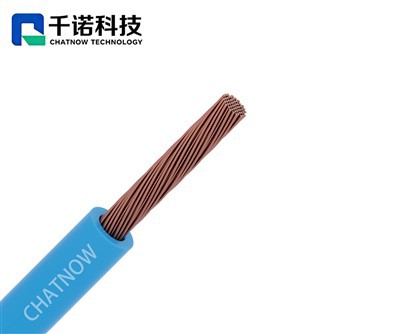
First, let’s start with what each protocol even is, because that’s the root of the cable difference. RS-485 is a multi-point, serial communication standard—think of it like a long hallway where 32 (or even more, with repeaters) devices can line up, pass notes back and forth, no one’s got to hold the whole hallway. It’s been around since the 70s, solid, tried-and-true for stuff like PLCs, sensor networks, old security systems, or even cash registers that chain together. CAN bus? That’s Controller Area Network, built back in the 80s for cars first—think of it like a tighter, faster hallway where every device has a ticket, if one drops a note everyone else ignores it, and it can handle way more nodes (like hundreds) without clogging up. Both use differential signaling, by the way—so two wires carrying mirrored signals, which cancels out electrical noise, perfect for factories where there’s welders, motors, all that garbage messing with signals. But that’s where the similarity ends, right down to the cable.
Let’s talk cable specs first, the boring stuff that actually matters when you’re unboxing a spool. For RS-485, the standard cable is almost always a twisted pair, sometimes with a shield if you’re in a noisy environment. Wait, not just any twisted pair—belden 8723 is the workhorse here, 22AWG twisted pair with 100 ohm impedance, right? Wait, why 100? Because RS-485 wants a termination resistor (usually 120 ohm, wait—hold on, impedance is the cable’s resistance to AC signals, so the cable needs to match the resistor to prevent signal reflections. That’s a big one. Most RS-485 cables are 22 or 24 AWG twisted pair, unshielded for low-noise offices, shielded (foil or braid) for factories. CAN bus, though—wait, what’s its cable spec? CAN usually uses a 120 ohm twisted pair, too, but a lot of people use what’s called “CAN cable” which is often a thinner 24 AWG, sometimes with a foil shield plus a drain wire? Wait, no, wait—there’s two types of CAN cable actually: high-speed CAN (which is what most automotive and industrial use) uses 120 ohm twisted pair, same as RS-485, but low-speed CAN might be different? Wait, no, let’s not overcomplicate. The catch here is that a lot of people think, “oh, same impedance, so I can swap the cables” but no—RS-485 cables often have a slightly looser twist rate than CAN. Wait, twist rate is how many twists per foot—if the twist is too slow, you get more crosstalk between pairs if you’re running multiple lines together, which is a huge issue in dense industrial setups. RS-485 can get away with a lower twist rate because it’s usually for point-to-multi-point, not as high-speed as CAN? Wait, CAN’s high speed is up to 1Mbps over 40 meters, right, RS-485 can go up to 10Mbps over 15 meters, or lower speed (like 9600 baud) over 1200 meters. So CAN’s twist rate is tighter, because it needs less crosstalk for higher speed.
Then there’s the connectors, which people forget is part of the cable system. RS-485 usually uses terminal blocks, DB9, or RJ45 adapters—you can crimp the wires to screw terminals, which is cheap and easy for field installs. CAN bus? A lot of time it uses DB9, or specifically the CAN bus connectors that have a pin for CAN High, CAN Low, Ground, and sometimes power. Wait, a key point: RS-485 cable only needs two signal wires (A and B) plus maybe a ground for the shield, sometimes a separate power wire if you’re powering devices over the line. CAN bus cable almost always needs those same two (CAN H, CAN L) plus ground, but also—wait, some CAN specs say you can’t use extra power lines on the data pair, but RS-485 is fine with that because it’s lower voltage. That’s a big mistake people make: they take a cheap Ethernet cable (which is 100 ohm, twisted pair) and use it for RS-485. Wait, is Ethernet cable bad for RS-485? Let’s see—Ethernet is 24 AWG, higher twist rate, but wait—no, the problem is that most Ethernet is a 4-pair cable, and if you only use two pairs, the twist is still there, but wait—RS-485 works, but signal loss is higher over long runs. Wait, a lot of my customers come back saying “I used a Cat5 cable for my RS-485 line and it worked for 50 feet but dropped data at 200”—that’s because Cat5’s twisted pair is designed for high-speed Ethernet, not the lower-speed, longer-distance RS-485. RS-485 cables are built to minimize insertion loss at lower frequencies, which is exactly what RS-485 uses (usually below 10MHz). CAN bus cable, on the other hand, is built for higher frequencies (up to 1MHz or more) so it has different loss specs.
Wait, let’s get into use cases, because that’s why you’d pick one cable over the other, and that’s where the confusion hits. RS-485 is for things where you need a bunch of devices on a single line, like a warehouse temperature sensor network—each sensor is an RS-485 node, you daisy chain them all on one A/B pair, run the cable 1000 feet, cheap, easy to add a node. CAN bus is for things where devices need to communicate fast, like a factory robot arm’s motor controllers, or automotive ECUs—if one node goes down, the whole network doesn’t crash, and it prioritizes high-speed data. Now, can you use an RS-485 cable for CAN? Sometimes, but only if the CAN network is low-speed. But can you use a CAN cable for RS-485? Probably, but it’s overkill, more expensive, and maybe smaller gauge which means more signal loss. Wait, another thing: termination resistors. Both protocols need a 120 ohm resistor at each end of the line, right? But RS-485 sometimes lets you use a 150 ohm resistor if you’re using older gear, whereas CAN is strictly 120. That’s another fine line between the two.
Let me tell you a story to make this real. A few months back, a small automation shop hit me up, panicking, saying their new PLC network was dropping data every night at 2AM when the factory ran the welders. They’d used CAN bus cables, because their previous project used CAN, and figured it was the same. We tested their line—they had a 500 foot run, 12 nodes, and the shield was connected to ground at both ends, which created a ground loop. Wait, ground loops are a huge noise source for both protocols, right? But RS-485 cables usually have a drain wire that lets you terminate the shield at one end, which fixes ground loops, whereas a lot of CAN cables only have foil shield, no drain wire? No, wait, that’s not true, but a lot of cheap CAN cables skimp on the drain wire. Wait, in their case, their CAN cable didn’t have a proper drain wire, so they couldn’t properly ground the shield at only one end, so the welder’s 60Hz noise was messing with the differential signal. We swapped their CAN cables for standard RS-485 shielded cables with a drain wire, terminated the shield at the PLC end only, and their data loss stopped. That’s a perfect example of how the cable’s construction (not just the protocol) affects real-world performance.
Another point: node count. RS-485 can handle up to 32 nodes on a single line, unless you add repeaters to split the line, then you can get hundreds. CAN bus can handle up to 110 nodes natively, which is more, but each node is a bit more complex, so the cable might have to carry more frequent signals. Wait, so if you’re running a small network with 10 sensors, RS-485 cable is way cheaper—my RS-485 spools are $0.15-$0.20 per foot, whereas a good CAN cable is $0.25-$0.35 per foot, for the same gauge. That’s a big difference for a 1000 foot run.
Wait, let’s clear up a common myth: people say “RS-485 is half-duplex, CAN is full-duplex” and think that affects the cable, but that’s protocol, not cable. The cable just carries the signal, the protocol dictates how devices use it. But the cable’s impedance does matter—if you use a 150 ohm cable for RS-485, that’s a mismatch with the 120 ohm termination resistor, and you get signal reflections which cause data errors. A lot of cheap, no-name RS-485 cables are actually 150 ohm, which is why you have to buy from a reputable supplier (that’s me, by the way) who specifies 100 ohm impedance, matched to RS-485’s standard.
So let’s sum up the key differences in plain English, no jargon:
- Cable Specs: Both are twisted pair with ~120 ohm impedance, but RS-485 cables are usually 22AWG, lower twist rate, often with a braid shield and drain wire for easy ground termination. CAN cables are often 24AWG, tighter twist, optimized for higher frequencies.
- Cost: RS-485 is cheaper, great for long runs, multiple nodes. CAN is pricier, better for high-speed, high-node industrial/automotive setups.
- Use Case Fit: RS-485 = daisy-chained sensors, PLCs, low-to-mid speed, long distances. CAN = fast industrial controls, automotive, nodes that need priority communication.
- Common Mistake: Swapping Ethernet cable for RS-485—Ethernet’s different impedance and twist rate cause signal loss over long runs. Cheap CAN cables can’t handle noisy factory environments like good RS-485 ones.
Now, here’s the thing: I see a lot of suppliers online trying to tell you that one is strictly better than the other, but it’s all about what your project needs. If you’re setting up a new temperature monitoring system for a warehouse, RS-485 is the way to go—my cables are built for that, with the right impedance and shield to handle warehouse noise, easy to install with terminal blocks. If you’re building a robot arm that needs fast communication between motors, CAN makes sense, but don’t waste money on overpriced CAN cable if you don’t need it.
Wait, let’s talk about something else: outdoor installs. If you’re running cable outside, underground, or exposed to the elements, RS-485 cables are often available with a UV-resistant jacket, whereas some cheap CAN cables use a thin PVC jacket that cracks in the sun. That’s another practical difference that comes up all the time. I’ve had a guy from a municipal water treatment plant hit me up, because his old CAN cable (cheap, no UV jacket) cracked after a year out by the lake, and we swapped it for our outdoor-rated RS-485, which has held up for three years now.
Now, if you’re still unsure what you need—if you’re looking at a project, wondering “should I go RS-485 or CAN, and what cable do I need”—hit me up. I’m not just here to sell you a spool of cable, I’ve been troubleshooting this stuff for years, I can help you figure out if a standard RS-485 cable is right, or if you need something specific (like high-temperature for ovens, or shielded for heavy noise). A lot of my customers are small shops that don’t have an electrical engineer on staff, so I walk them through it: “if your run is over 500 feet, stick to 22AWG RS-485; if you’re under 100 feet, you might get away with a thinner cable, but better safe than sorry.”
Wait, before we go, let’s make sure we didn’t miss anything important. Oh, right: signal termination. Both need resistors at each end, but for RS-485, you can use a simple 120 ohm resistor that clips onto the end of the line, whereas CAN sometimes has the resistor built into the device, so you only add it at the end nodes. But that’s protocol, not cable, but it ties into why the cable’s construction matters—if the impedance is off, the resistor doesn’t work right.
Another common error: people run RS-485 cable parallel to power cables, which causes noise, but that’s not a cable issue, that’s installation. But a good RS-485 cable has a better shield than a cheap CAN cable, so it can handle a little more of that noise than a generic CAN cable.
So to wrap this up, the core difference isn’t just the cable—it’s what the protocol is designed to do, and the cable is built to match that. RS-485 is the workhorse for long, low-to-mid speed, multi-node industrial setups, uses a rugged, affordable twisted pair cable with a solid shield. CAN is for faster, more compact, high-node setups, uses a slightly different cable optimized for higher frequencies. Don’t fall for the “one size fits all” hype—get the cable that matches your project, and if you’re not sure, reach out. I’m here to help, no sales pitch, just straight talk about cable specs and use cases.
Wait, I should mention—never use a random twisted pair cable from the local hardware store for RS-485. Most hardware store “twisted pair” is for speakers, not data, and has wrong impedance. That’s a mistake I see all the time, and it leads to all sorts of headaches. My RS-485 cables are tested for 100 ohm impedance, right twist rate, and shield continuity, so you don’t have to test every spool yourself.
At the end of the day, the worst thing you can do is cut corners on the cable. A few bucks saved on a cheap cable will cost you hours of downtime when your network goes down. If you’re planning a project, need a quote, or just have questions about which cable is right, get in touch. I’ll hook you up with the right spec, and even help you figure out how much you need without overbuying.

Oh, and one last note: if you’re working on a project that’s switching from RS-485 to CAN, or vice versa, don’t just swap the cable without checking the impedance and twist rate. Even a small mismatch can cause data errors. That’s where having a supplier who knows the difference matters.
Fire Protection Cable REFERENCES
- "RS-485 Standard Specifications", Electronic Industries Association (EIA), 1983
- "CAN Bus Physical Layer Specifications", Bosch, 2016
- Industrial Communication Cables: Design and Application, McGraw-Hill, 2021
- "Ground Loop Noise Mitigation in Differential Signaling", IEEE Transactions on Industrial Electronics, 2019
Zhejiang Chatnow New Material Technology Co., Ltd.
Zhejiang Chatnow New Material Technology Co., Ltd. is well-known as one of the leading rs-485 cable manufacturers and suppliers in China, specialized in providing high quality customized service. Please feel free to wholesale high-grade rs-485 cable at competitive price from our factory.
Address: Building 12, No.9 Huajin Road, ZhouWangMiao Town Innovation Center, Haining, Zhejiang 314400
E-mail: info@chatnow-cable.com
WebSite: https://www.chatnow-cable.com/
