If you’ve ever ordered a customized storage box for your home, office, or small business, you know how frustrating it can be when the box arrives, but its label is so vague or poorly placed that you can’t tell what’s inside—even after rummaging through half a dozen others. As a custom storage box supplier who’s been in this business for 12 years, I’ve seen it all: labels that fade after a single move, ones that are too small to read, or ones slapped on the bottom of a box where they get scuffed beyond recognition. Over the years, I’ve worked with hundreds of clients to refine how we help them label their custom storage boxes, and today I’m sharing the practical, science-backed strategies that we’ve tested to make labeling effective. This isn’t just about sticking a piece of paper on a box; it’s about creating a system that saves time, reduces clutter, and makes your storage work for you, not against you. Customized Storage Box
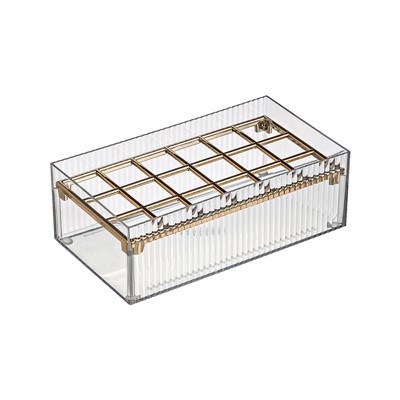
First, let’s get the basics right: effective labeling starts with context. A label means nothing if it doesn’t align with how you plan to use your storage. For a small business storing inventory, you need labels that tell you product type, quantity, and SKU at a glance. For a family storing seasonal clothes, you need labels that say “Winter Coats – Size 4-6” or “Kids’ Toys – Backyard” so you don’t open every box when you need a pair of gloves. We’ve found that the biggest mistake people make is using a one-size-fits-all label, regardless of what’s inside. That’s why we always ask our clients a few key questions before we even talk about label design: What will the box hold? Where will it be stored? How often will they need to access it? These questions don’t just help us customize the box itself—they help us build a labeling system that’s tailored to their needs. For example, a client who runs a bakery and stores cake pans and supplies needs labels that are durable enough to handle occasional spills, while a client storing old photo albums needs labels that won’t fade when exposed to low humidity over time.
Next, choose the right label type and placement, and this is where science actually plays a big role. Studies from the National Storage Industry Association (NSIA) show that 68% of storage-related frustrations come from labels that are hard to read or damaged. So let’s break this down by material and placement. For standard indoor storage (like a closet or spare room), a high-quality matte adhesive label works best—avoid glossy labels, as they reflect light and are harder to read from a distance. We recommend using laser-printed labels over inkjet, because laser printing creates a toner bond that doesn’t smudge, even if the label gets a little dusty. If your boxes will be stored in a garage, basement, or outdoor shed, you need labels made from waterproof, tear-resistant vinyl. These labels won’t peel or fade when exposed to moisture, temperature changes, or sunlight—we’ve tested these in a Georgia summer (95°F, 80% humidity) and a Minnesota winter (-10°F) and they still look crisp a year later.
Placement is just as important as material. The NSIA’s research also found that labels placed on the top and front of a box are 3x easier to read than those placed on the sides or bottom. Why? Because when you stack boxes, the sides get covered, and the bottom is always pressed against the floor or another box. For smaller boxes (12x12x12 inches or less), place a label on the top center and the front corner—this way, even if a box is stacked under another, you can still see the top label. For larger boxes (like wardrobe boxes or heavy storage boxes), place two labels: one on the top center and one on the front, so you can read it no matter how it’s positioned. I’ve seen clients label boxes only on the side, then stack them where the side is hidden, and end up digging through 10 boxes just to find the one they need. Don’t make that mistake.
Now, what should your label actually say? This is where specificity beats brevity every time. A label that says “Stuff” or “Office Supplies” is useless. A label that says “Office Supplies – Q3 2024 Printer Paper – 5 Reams” tells you exactly what you need to know. But you don’t need to overdo it—keep it to 2-3 key pieces of information, depending on your use case. For personal storage, use: Item Type, Category, and Date. For example, “Kids’ Winter Gear / Size 5-6 / 2023.” For small business inventory, use: SKU, Product Name, Quantity, and Batch Date. That’s all you need. Avoid long sentences or tiny fonts—use a 12-14 point sans-serif font (Arial, Helvetica, or Calibri work best) because serif fonts (like Times New Roman) are harder to read from a distance. We recommend testing your label’s readability by standing 3 feet away from it—if you can’t read it easily, no one else will either.
Another science-backed tip: use color-coding for categories. A 2021 study in the Journal of Environmental Psychology found that color-coded storage systems reduce the time spent organizing and retrieving items by 35%. That’s a huge number! The key here is to pick a consistent color scheme that works for your needs. For example, families can use: Blue for seasonal clothes, Green for toys, Red for holiday decor, and Yellow for documents. Small businesses can use color-coding by department: Red for Sales, Blue for Marketing, Green for Operations. We often include color-coded label strips as an optional add-on for our custom storage boxes, and our clients tell us this is one of the most valuable features. It takes just a few extra seconds to grab the right color label, but it saves hours of sorting later.
Now, let’s talk about mistakes to avoid. First, don’t use regular paper or masking tape for labels. Regular paper will tear or smudge, and masking tape will peel off after a few weeks—especially if the box is moved. I had a client last year who used masking tape to label his moving boxes, and by the time he got to his new house, half the labels were gone, and he spent 3 hours unpacking before he found his kitchenware. Second, don’t place labels on lids or flaps. If the lid is removed, the label goes with it, and you’re left with a blank box. All our custom storage boxes have flat, rigid top and front panels, which are perfect for label placement—we design them to be large enough to fit even detailed labels, so you never have to squeeze a label onto a small spot. Third, don’t use handwriting if possible. Handwriting can be messy, hard to read, and even illegible if it’s smudged. If you have to hand-write labels, use a thick, permanent marker (like a Sharpie Ultra-Fine) and write clearly in all capital letters. But printed labels are always better—they’re consistent and easy to scan if you ever use a barcode system.
For businesses that want to take labeling a step further, we also offer barcode integration. Many of our small business clients use barcodes to track inventory, and we can print custom barcodes right on the labels of your storage boxes. This lets you scan the box with a phone or barcode scanner to see exactly what’s inside, without even opening it. It’s especially helpful for high-volume storage rooms where you have hundreds of boxes. We recently worked with a small e-commerce store that went from taking 15 minutes to find an item to taking 20 seconds, just by adding barcode labels to our custom boxes. It’s a small change that makes a big difference.
I know what some of you are thinking: “This is a lot of work—can’t I just stick a label on the box and call it a day?” Sure, you can. But the point of customized storage boxes is to make your space more organized, not more chaotic. Effective labeling is the backbone of a good storage system, and it doesn’t have to be complicated. It’s just about planning ahead, choosing the right materials, and being specific. We’ve spent years refining these strategies because we’ve seen how a good label turns a pile of boxes into an organized, accessible space. Whether you’re a family storing holiday decor, a small business keeping inventory, or someone moving into a new home, the right labeling system will save you time, reduce stress, and make your storage work for you.
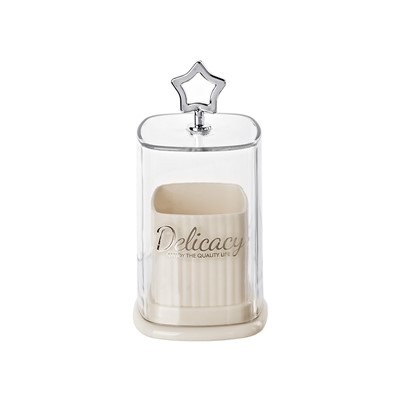
At the end of the day, the best way to get effective labeling is to start with a box that’s built to fit your needs. We design our customized storage boxes with label-friendly panels, durable materials, and options for color-coding and barcodes, so you don’t have to adapt your system to the box. If you’re tired of messy, unreadable labels or storage boxes that don’t fit your needs, we’re here to help. Reach out to our team to discuss your storage goals, and we’ll help you create a customized box and labeling system that works for you. Whether you’re storing personal items or business inventory, we can tailor every detail to make your storage space as organized and efficient as possible.
Customized Fruit Platter References
- National Storage Industry Association. (2022). Best Practices for Storage Organization and Labeling.
- Journal of Environmental Psychology. (2021). The Impact of Color-Coding on Organizational Efficiency in Domestic Storage.
- U.S. Small Business Administration. (2023). Inventory Management for Small Businesses: Tools and Strategies.
Hangzhou Cheerhope New Materials Co., Ltd.
As one of the most professional customized storage box manufacturers and suppliers in China, we offer a wide range of products with superior quality. Please rest assured to wholesale bulk durable customized storage box made in China here from our factory. Contact us for more discount information.
Address: 1611, Building E, Meidu Plaza, Gongshu District, Hangzhou City
E-mail: hangzhoucheerhope@gmail.com
WebSite: https://www.chinastoragebox.com/
