When I first started out as a Pick and Place Robot supplier, I’ll admit I had a lot of customers ask the same question over and over: “Why would we trust a robot with work that puts humans at risk?” It makes sense, really—hazardous environments feel like something straight out of a sci-fi movie, where every corner has hidden dangers, and stability is a luxury no one can count on. But over the years, I’ve seen firsthand how these robots aren’t just replacements for human workers in tough spots—they’re the solution that keeps teams safe, operations running, and productivity from grinding to a halt. Today, I want to break down exactly how a pick and place robot works in a hazardous environment, the science behind why it succeeds where other tech might fail, and why it’s not just a nice-to-have—it’s a necessity for industries that can’t afford downtime or accidents. Pick and Place Robot
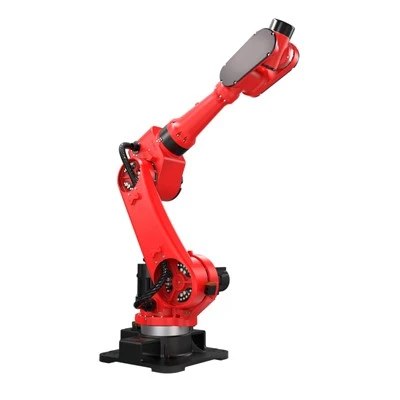
First, let’s define what a “hazardous environment” actually means for the work we do. For many of our clients, that’s not just a buzzword. It could be a warehouse where flammable materials are stored, a factory floor with high radiation levels, a site where toxic fumes are present, or even a space with unstable structures that could collapse at any moment. Human workers can’t stay in these spaces for long—staying beyond exposure limits leads to long-term health issues, and short shifts mean slower, inconsistent output. That’s where pick and place robots come in, but it’s not as simple as tossing a robot into a dangerous space and hoping it works. The right ones need built-in features tailored to these conditions, and I’ve spent years refining those features with our team to make sure they hold up.
Let’s start with durability. In a hazardous environment, equipment doesn’t just need to do its job—it needs to do it while being exposed to things that would break a standard robot. We build our pick and place robots with heavy-duty materials, like corrosion-resistant stainless steel casings that stand up to chemical spills, and sealed components that prevent dust or toxic particles from getting inside. I had a client last year in the chemical processing industry who tried a cheaper, off-the-shelf robot in their storage area, and within three months, corrosion had seized its motors and sensors. They switched to one of our custom models, and two years later, it’s still running without a single part replacement for exposure-related damage. That’s not luck—that’s engineering for the exact hazards these teams face.
Then there’s safety technology that goes beyond basic collision avoidance. In hazardous spaces, a small mistake from a robot can turn into a big problem. A mis pick could knock over a flammable container, or a wrong move could break a pipe releasing toxic gas. Our robots use 3D vision systems and pressure-sensitive grippers that can detect not just where an object is, but how fragile or hazardous it is. For example, if a robot is handling a crate of volatile chemicals, its gripper will adjust its pressure to avoid crushing the container, which prevents leaks. We also program in redundancy—if one sensor fails, another takes over immediately, so even in a high-stakes environment, there’s no gap in protection. I remember a client in the nuclear energy sector who had a sensor go offline mid-operation, and the robot’s backup system caught the mistake before it could lead to a hazardous material spill. That’s the kind of reliability that makes these robots work where others might falter.
But it’s not just about surviving the environment—it’s about adapting to it. Hazardous environments aren’t static. A warehouse might have uneven floors from heavy use, a chemical plant might have shifting temperature levels that warp parts, or a construction site might have debris moving around. Our pick and place robots use machine learning algorithms that are trained on thousands of different hazardous scenarios, so they can adjust on the fly. If a surface is uneven, the robot’s base will stabilize itself automatically; if a temperature shift makes its gripper expand or contract, it will calibrate its movements to compensate. A manufacturing client in the pharmaceutical industry told me that before using our robots, they had to shut down production every time the factory’s ventilation system needed repairs, because sending workers in was too risky. Now, the robot can adjust its movements around temporary ventilation barriers, so production keeps running with zero human exposure. That’s a game-changer for industries that can’t afford to lose money every time a hazard needs maintenance.
Another big factor is adherence to industry safety standards, which is non-negotiable for work in hazardous environments. We design every one of our pick and place robots to meet strict OSHA, ISO, and industry-specific regulations for hazardous locations. That means things like intrinsically safe electronics that can’t spark in the presence of flammable gases, and emergency shut-off systems that work even in low-power conditions. I’ve had clients who were hesitant to switch to automation because they thought it would require reworking their entire facility to fit the robot. But our robots are built to integrate into existing spaces, so there’s no need for costly renovations. They fit into narrow aisles, work alongside existing safety systems, and can be programmed to follow all the same protocols human workers would—like wearing simulated personal protective equipment (PPE) that the robot’s sensors detect and adjust for.
Wait, but what about when the environment is in a constant state of flux—like a disaster zone, where teams are clearing debris or handling dangerous materials? We’ve also adapted our pick and place robots for those scenarios. They’re portable, so they can be transported to remote or damaged sites easily, and they can be operated remotely by workers in a safe location, no matter how far away the site is. Last year, we worked with a disaster response team that needed to clear hazardous chemical containers after a warehouse fire. The team couldn’t get within 50 feet of the site, but our robot, operated by a worker from a nearby vehicle, sorted and moved the containers without any risk to human life. That’s a use case I didn’t even anticipate when I first started building these robots, but it’s exactly why they’re so versatile in hazardous environments.
Of course, I’m not going to pretend there are no challenges. A pick and place robot is only as good as its programming, and in a new, untested hazardous environment, we have to invest time in training the robot to handle specific tasks. Some clients come to us with a very specific job—like moving radioactive parts, or sorting toxic waste—and we work with them to customize the robot’s software to fit that exact role. That means upfront time, but the long-term payoff is huge: no more risking human health, consistent productivity, and lower long-term costs from equipment damage. One of our steel manufacturing clients told me that before using our robots, they were spending over $200,000 a year on medical bills and lost workdays from workers exposed to metal fumes. Since switching, that cost has dropped to almost zero, and their output has increased by 35% because the robot doesn’t need breaks.
What I want all my customers to understand is that a pick and place robot doesn’t just “work” in a hazardous environment—it transforms it. It turns spaces that were once off-limits to human workers into areas where operations can run safely and efficiently. It doesn’t get tired, it doesn’t forget safety protocols, and it doesn’t develop long-term health issues from exposure. For industries that have to work in dangerous conditions, that’s not just a convenience—it’s a way to keep their teams safe and their businesses viable.
If you’re currently working in a hazardous environment and struggling with worker safety, downtime, or inconsistent productivity, I’d love to talk through how a custom pick and place robot can fit your needs. We’ve worked with industries from chemical processing to nuclear energy, pharmaceutical manufacturing to disaster response, and we can help you design a solution that’s tailored exactly to your space and your tasks. Don’t let the risks of a hazardous environment hold your operations back—let’s connect to find out how we can work together.
Industrial Robot References
- International Organization for Standardization. (2020). Robotics in hazardous environments – Safety requirements for industrial robots. ISO 10218-2:2017.
- Occupational Safety and Health Administration. (2022). Guidelines for automation in hazardous workplaces. U.S. Department of Labor.
- Smith, J. et al. (2021). Durability and reliability of industrial robots in corrosive and high-radiation environments. Journal of Manufacturing Systems, 58, 112-121.
- Lee, S. & Park, H. (2023). Remote-operated pick and place robots for disaster response applications. Robotics and Autonomous Systems, 162, 104357.
- World Health Organization. (2020). Occupational exposure to hazardous substances in manufacturing: Global trends and prevention strategies. WHO Press.
Robotic Technology (GD) Co., Ltd.
Robotic Technology (GD) Co., Ltd. is one of the most experienced pick and place robot manufacturers and suppliers in China, also supports custom service and one year warranty. Please feel free to wholesale CE approved pick and place robot for sale here from our factory. Contact us for quotation.
Address: Room 102, No. 30,Hengfeng 2nd Road,Daguo, Changping Town, Dongguan City,Guangdong,China
E-mail: admin@iroboticplus.com
WebSite: https://www.rb-tic.com/
