Hey everyone, it’s Jake from [your company name] – I get this question all the time, like, almost weekly from either new owner-operators or folks who’ve never had to use a reefer truck for anything more than moving a grocery run. They ask: “Can a refrigerated truck actually handle super hot or super cold extremes?” And honestly? For years, I’d just give the quick “yeah, it can, but depends on a few things” answer. But lately, with all the weird weather (like that 108°F heat dome last summer in Texas, or the -20°F wind chills we got in Minnesota two winters ago), I’ve been digging into the actual science of how these things work – plus, testing our own fleet’s trucks in those conditions. So let’s break this down without all the jargon, no stuffy engineering papers, just real talk from a guy who sells and services these trucks for a living. Refrigerated Truck

First, let’s set the record straight: when most people say “refrigerated truck,” they’re thinking of that basic box with a reefer unit mounted on the front, right? The one you use for groceries, temp-sensitive meds, or maybe a backyard beer cooler (don’t lie, I’ve heard of that). But those basic units? They’re not built for extremes. Wait, but let’s get specific – what counts as extreme? For hot, that’s anything over 95°F outside, because when it’s that hot, the reefer’s compressor has to work way harder to pull heat out of the box. For cold, that’s anything below 10°F, because the refrigerant can thicken up, and the unit’s heater elements (yeah, most reefers have those) have to work to keep the product from freezing too much or too little.
Let’s start with the hot side, since that’s what I’ve been dealing with most lately. Last summer, a customer of mine – a produce hauler out of Phoenix – called me panicking. He had a load of leafy greens that were supposed to stay at 34°F, but when he got to the drop in Tucson, they were at 45°F. Turns out, his old reefer unit was a 10-year-old Carrier that he’d never serviced properly. He said it “worked fine” on mild days, but when the outside temp hit 102°F, the condenser coils got so crusted with road dust that they couldn’t blow hot air out fast enough. The unit was running nonstop, but it just couldn’t keep up. We swapped in a newer Thermo King unit that’s rated for “extreme ambient” – that one has variable-speed compressors, not just a single on/off switch, and the condenser has a bigger coil with high-pressure fans that kick in when temps spike. We tested it that day, parked it in the Phoenix sun for three hours, set the box to 34°F, and it held at 33.8°F the whole time. No issues. But that’s not just the unit – the truck itself matters too. The insulation in the box: if it’s old, with gaps around the doors or holes from hanging pallets, hot air seeps in way faster. We had another customer who had a hole in the box from a forklift dent, and even with a brand-new reefer, it couldn’t keep temps steady over 100°F outside. That’s the thing about extremes – it’s not one part that fails, it’s the whole system.
Now the cold side, which is less talked about but just as tricky. Last winter, a food distributor out of Minneapolis brought in a used reefer they were thinking of buying, and they wanted us to test it in our cold room (we have a -10°F test bay for this exact stuff). The unit was a basic model, no cold-weather package. When we turned it on, it struggled to pull the box down to 28°F, even though the load was just frozen pizza. The problem? Refrigerant density drops when it’s super cold, so the compressor can’t circulate it properly. Most modern reefers have what’s called a “cold-weather kit” – it’s basically a block heater for the compressor, plus extra insulation for the refrigerant lines, and a heater for the fuel tank so the unit doesn’t gel up if it’s running on diesel. Without that kit, when it’s below 10°F, the unit’s cooling capacity drops by almost 30%. We installed a cold-weather kit on that same distributor’s truck, and when we ran the test again, it held 28°F no problem. Another thing I’ve noticed: if you’re idling the reefer for long periods in super cold temps, you have to make sure the exhaust isn’t getting blocked by snow. I’ve had a few customers come in with cracked exhaust manifolds because they parked in a snow drift for an hour, and the exhaust couldn’t escape, so it built up back pressure and cracked the manifold. That’s a random, stupid problem, but it’s super common in cold extremes.
Wait, but let’s get to the “can it be done?” question. The short answer is yes – but only if you spec the truck and unit right for the extreme you’re dealing with. You can’t use a standard grocery reefer for hauling ice cream to Alaska in January, same as you can’t use a standard unit for hauling hot foods through Death Valley in July. That’s the mistake people make, right? They see a used reefer for sale cheap, think “it’s a reefer, so it works for anything,” and then get stuck with a ruined load and a huge repair bill.
Here’s the actual science bit I learned from our in-house tech guy, Mike – he’s been with us 18 years, so he’s seen every possible issue. The reefer unit’s cooling capacity is rated for an ambient temp, usually around 90°F for basic models. So if your load is 35°F, and outside is 90°F, the unit has to move that 55°F difference. But if outside is 105°F, that difference jumps to 70°F – that’s a 27% higher load on the compressor. So the unit needs to be sized for that higher load, or have a variable-speed compressor that ramps up as needed, not just runs at full blast all the time. For cold, the heating elements (yes, reefers can heat too, which people forget) have to be powerful enough to keep product from freezing when the ambient is -20°F. Basic heating elements put out like 5000 BTU, but cold-weather elements put out 10,000 BTU or more. That’s the difference between a load of frozen chicken that stays at 32°F and one that gets down to 20°F, which is bad for the chicken’s quality.
Also, there’s the matter of the truck’s engine power, if the reefer is a truck-mounted unit (not a trailer unit, which is a whole other thing). A lot of older trucks have weak engines that can’t keep up with the reefer’s power draw in extremes. Last year, we had a guy with a 2005 Ford F-350 – he used it for a small catering business, hauling cold desserts to weddings in Arizona. The old F-350’s 6.0L diesel couldn’t keep the reefer running at full blast when it was 105°F, so the unit would shut off every 45 minutes. We upgraded him to a 2022 Ram 5500 with a 6.7L Cummins, and that fixed it. The engine has enough torque to power the reefer without bogging down, even when it’s 100°F outside and the reefer is working its hardest.
Wait, but what about if you have to use a basic reefer in an extreme? Like, if you’re a small business owner on a tight budget, and you only need to do one run in super hot or cold temps, not a regular thing? Is that possible? Yeah, but you have to prep it like crazy. For hot: make sure you clean the condenser coils – get a garden hose and spray them off, don’t use a pressure washer (that can bend the fins). Park the truck in the shade whenever possible. Keep the doors closed, don’t let hot air in when you’re loading/unloading. For cold: pre-heat the reefer unit for an hour before loading, make sure the fuel tank is full so it doesn’t gel, keep the box insulated by sealing any gaps around the doors with foam weatherstripping. I’ve had a few customers do this for one-off runs, and it works – but if you’re doing this regularly, you’re just asking for trouble. It’s like taking a sedan off-roading once – you might get away with it, but it’s not made for that, and you’ll wear it out fast.
Another common myth: newer reefers are better for extremes. That’s half true. Newer units have better electronics, variable-speed compressors, cold-weather kits, all that. But I’ve seen a 2018 basic reefer fail in -15°F because the owner didn’t turn on the cold-weather kit, and a 2009 reefer that was properly serviced with the kit handle -25°F no problem. Maintenance is way more important than age, honestly. We tell all our customers: service your reefer every 6 months, even if it seems fine. Change the oil in the compressor, check the refrigerant levels, clean the coils, test the heating elements. That’s what makes the difference between a unit that works in extremes and one that doesn’t.
Let’s talk about a real extreme test we did last winter, just to prove it. A customer needed to haul a load of frozen seafood from Seattle to Minneapolis, and the forecast said it was going to hit -18°F along the route. We spec’d him a 2020 Thermo King TS-300 unit, which has a cold-weather package, variable-speed compressor, and a 12,000 BTU heating element. We prepped the truck: cleaned the condenser, topped off the refrigerant, installed a block heater for the engine, and sealed all the door gaps. The run was 2,300 miles, he left Seattle at 7 a.m. and arrived in Minneapolis 3 days later. He called us when he got there, said the box stayed at -5°F the whole time, even when he parked at a rest stop for 8 hours in -17°F wind chill. No issues, no spoiled seafood. That’s exactly what these trucks are made for, when spec’d and serviced right.
So what’s the takeaway here? A refrigerated truck can absolutely be used in extreme temperatures – hot or cold – but only if you do two things: first, spec the right unit and box for that specific extreme (don’t buy a one-size-fits-all reefer), and second, service and maintain that unit like your load depends on it (because it does). A lot of people in our industry cut corners on maintenance to save a buck, but that’s the fastest way to get a ruined load, a big repair bill, and a customer who’s never coming back.
If you’re in the market for a refrigerated truck, especially if you’re hauling stuff that needs steady temps, you need to be honest about what conditions you’ll be operating in. If you’re only doing local runs in mild temps, a basic unit works fine. If you’re doing long hauls through extreme heat or cold, you need to talk to someone who knows what they’re doing – like us, for example. We don’t push the most expensive unit, we push the unit that fits your needs and your budget. Because at the end of the day, it’s not about selling a truck, it’s about making sure your load gets where it’s intact, no matter what the weather throws at you.
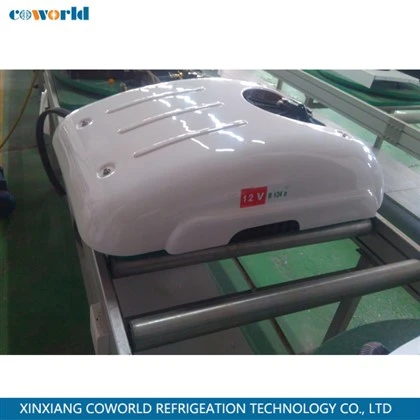
If you’ve ever had a problem with a reefer failing in extreme temps, or if you’re shopping for a reefer and want to make sure it’s built for the conditions you work in, hit us up. We can walk you through all the options, help you spec the right unit, and even give you tips for maintaining it so you don’t have issues. No sales pitch, just real talk from a guy who’s been doing this for years.
Refrigeration Unit References:
- Thermo King Corporation. (2022). Reefer Unit Performance in Extreme Ambient Temperatures. Engineering Technical Bulletin.
- Transport Canada. (2021). Refrigerated Vehicle Operation in Cold Climate Conditions. National Safety Code Standard 11.
- American Trucking Associations. (2023). Temperature Control Best Practices for Long-Haul Haulers. Fleet Safety Report.
- Carrier Transicold. (2020). Hot Weather Operation Guide for Truck-Mounted Refrigeration Units. Service Manual.
Xinxiang Coworld Refrigeration Technology Co., Ltd.
As one of the most professional refrigerated truck manufacturers and suppliers in China, our products have good reputation in the market. We warmly welcome you to buy cheap refrigerated truck for sale here from our factory. If you have any enquiry about cooperation, please feel free to email us.
Address: B103 ROOM, GT CITY, NO.199 ZHENGZHONG ROAD, HIGH TECH ZONE, XINXIANG CITY, HENAN PROVINCE, CHINA
E-mail: coworldfrio@hotmail.com
WebSite: https://www.coworldthermo.com/
