Hey everyone, I’m Jake, and if you’ve ever waited 30 minutes for your shop to fix a check engine light that turns out to be a wonky sensor, you already know how annoying these small parts can be. As someone who’s been in the vehicle sensor game for 8 years—running the supply side, not the repair side—I hear it all: “Why does this $20 part cost so much? What does it even do under the hood?” Today, I’m breaking down the most common question I get at trade shows and over late-night support chats: How the hell does a vehicle’s electrochemical sensor actually work? Let’s keep it real—no stuffy engineer jargon, no fake data, just what you need to know, especially if you’re a tech, a shop owner, or someone who’s just tired of guessing why your car won’t pass emissions. Vehicle Sensor
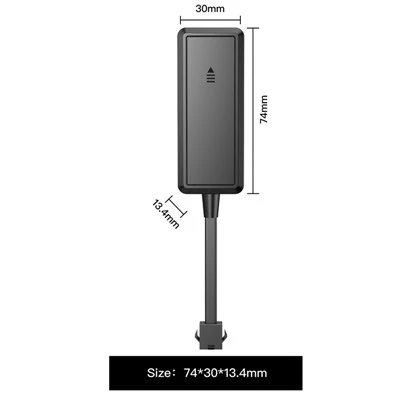
First off, let’s get one thing straight: not all vehicle sensors are electrochemical. You’ve got the regular old wheel speed sensors (those magnetic ones that trigger ABS), the oxygen sensors everyone rants about, the MAP (manifold absolute pressure) sensors, even the ones that check battery health—some are piezometric, some are resistive, and only a handful rely on electrochemistry. The big three that fall into this group? Exhaust oxygen (O2) sensors, wideband oxygen sensors, and NOx (nitrogen oxide) sensors—those fancy ones on newer diesel and gas cars that are key for emissions and smog checks. If you’ve worked on a post-2018 vehicle, you’ve definitely replaced one of these.
Let’s start with the OG: the standard zirconia O2 sensor, because that’s the electrochemical sensor everyone’s been using for decades. I remember the first time I held a prototype zirconia sensor in 2015, before we switched to our current supply line—this thing is tiny, but it’s basically a little chemical lab on a ceramic thimble. Here’s how it works, step by step, like I’m explaining it to my buddy who fixes trucks out of his garage:
Zirconia is a weird ceramic, right? At high temps (like 600°F, which is exactly what the exhaust heats the sensor to once your car’s warmed up), it lets oxygen ions pass through it—no other gases, just O2. The sensor has two sides, each with a porous platinum electrode fused to the zirconia: one side is exposed to ambient air (that’s the reference side, always has a steady 20.9% oxygen, like the air we breathe), and the other is stuck in the exhaust stream.
Now, oxygen ions always want to balance out, right? If one side has way more O2 than the other, they’ll move across the zirconia to equalize. The difference in concentration between the reference air and the exhaust O2 creates a tiny voltage—like, only 0.1 to 0.9 volts. That voltage is what the car’s ECU (engine control unit) reads. If the exhaust has way too much oxygen (lean burn, like if your engine’s running too much air and not enough gas), the voltage hovers around 0.1V. If there’s almost no oxygen (rich burn, too much gas, black smoke coming out the tailpipe), it jumps to 0.9V. The ECU uses that signal to tweak the fuel mix, so your car runs clean and doesn’t guzzle gas. Simple, right?
But wait, the standard zirconia sensor only flips super fast—like, every second or so back and forth between lean and rich. Newer cars need way more precise data, so they use wideband O2 sensors, which are also electrochemical, but a different setup. I get questions about these all the time at trade shows—techs say “My wideband won’t calibrate, what’s up?” and half the time it’s a misread on the electrochemistry side. Let’s keep this short: wideband sensors add a third auxiliary electrode, not just two. That extra electrode lets the ECU pump current through the sensor to adjust the oxygen level in the exhaust side until it matches the reference. The amount of current needed is directly tied to how much oxygen’s actually there, so you get a super precise signal—down to 0.01 of a volt, enough to tell the ECU exactly how much gas to spray, even at idle or wide-open throttle. It’s like the difference between a rough estimate and a GPS location—way more accurate.
Now the big one these days: NOx sensors. If you drive a diesel, or a gas car from the last 10 years that’s required to pass strict emissions, you’ve got two of these. NOx is that nasty pollutant made when high combustion temps (like in a diesel engine) cause nitrogen and oxygen in the air to bond. The EPA went crazy on NOx limits a decade ago, so manufacturers had to come up with sensors that can measure tiny amounts of it in the exhaust—like parts per million, not percent. And that’s where electrochemistry gets even cooler.
NOx sensors work on a different ceramic, usually titanium oxide or sometimes a mix of zirconia and another metal, heated to an even higher temp—like 800°F, because that’s how you can split NOx into nitrogen and oxygen. The sensor has two chambers, both with electrodes. The first chamber gets the raw exhaust: here, a voltage is applied to split NOx molecules, turning them into N2 (harmless nitrogen) and O2. The O2 that’s split off moves through the ceramic to the second chamber, where another electrode measures the current generated by those O2 ions. The more NOx in the exhaust, the more O2 gets split off, the higher the current—so the ECU knows exactly how much NOx is there, and tells the selective catalytic reduction (SCR) system to spray diesel exhaust fluid (DEF) to neutralize it. No NOx sensor, no passing a modern emissions test—period. I’ve seen shops lose hundreds of bucks because they skipped replacing a NOx sensor and their truck failed smog.
But here’s the thing about these sensors that a lot of techs and even some shop owners don’t get: they’re super finicky, and half the time “sensor failure” isn’t the sensor itself—it’s bad installation or a tiny chemical issue. Let’s use our supply side knowledge here, since I’m not just a guy explaining theory—I’m the guy who’s seen thousands of these go bad for stupid reasons. The platinum electrodes on O2 and NOx sensors can get fouled up. What’s fouling? It’s when carbon deposits from bad gas, or oil from a leaky piston ring, or even road salt, gunk up the porous platinum. The pores get clogged, so oxygen can’t get through to the zirconia or titanium oxide, and the signal drops. That’s why you can’t just clean a bad sensor and call it a day—we test every sensor we ship to make sure the porous electrode is at 100% porosity, because even a 10% clog will make it send a garbage signal to the ECU.
Another big one: cross-sensitivity. That’s when the sensor picks up other gases that aren’t what you’re testing for. For example, a NOx sensor might mistake ammonia (from old, bad DEF) for NOx, sending a false positive signal that makes the SCR system overspray DEF, which wastes fuel. We add a tiny filter layer to our NOx sensors specifically to block ammonia, because we’ve seen too many of our sensors get returned for “bad readings” that were actually bad DEF from the shop. That’s the stuff no one talks about—supply side fixes that make the sensor work right, not just the theory.
Now, let’s get real about why this matters to you, not just to me as a supplier. A faulty electrochemical sensor doesn’t just trigger a check engine light. A bad O2 sensor can make your gas mileage drop by 10-15%—that’s $150 extra a year in gas for most people. A bad NOx sensor can get your car or truck flagged for emissions, and in some states, even get you a fine if it’s over the limit. For shop owners, using cheap, off-brand sensors that cut corners on the electrochemistry (like using low-grade platinum or a ceramic that doesn’t hold up to heat) means more comeboys—you’ll have a customer back a week later complaining the light is back, and that’s lost trust. That’s why we test every sensor we produce in our lab—we simulate 100,000 miles of exhaust exposure, temperature swings from -40°F to 120°F, to make sure the electrochemistry holds.
I get it, a lot of people think vehicle sensors are just little parts you swap out and forget about. But the electrochemical ones are basically mini chemical reactors, calibrated to work with your car’s ECU down to the millivolt. When I started in this business, I thought it was just slapping together a ceramic and some platinum—turns out, it’s all about the chemistry: getting the right ion conductivity, the right porosity, the right electrode material, so the signal your car gets is accurate enough to keep it running clean, efficient, and legal.
At the end of the day, if you’re a tech trying to nail a hard-to-diagnose emissions issue, a shop owner tired of dealing with bad sensor returns, or even a regular person who just wants their car to run right and not throw money away, understanding how these sensors work helps. You’ll stop falling for the “replace this part” scare tactics, and you’ll know what to ask for when you need a sensor that actually works.
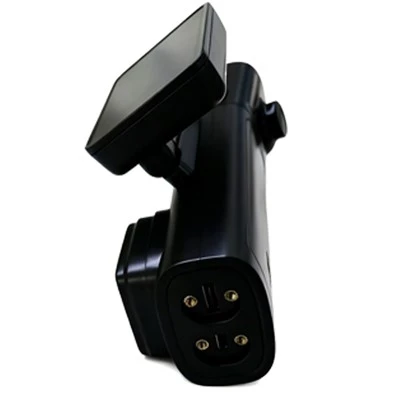
If you’re looking for reliable, tested electrochemical sensors for your shop or fleet, hit us up to chat about your needs—whether you need standard O2, wideband, or NOx sensors, we’ve got supply lines that meet OEM specs, no cheap knockoffs. We work with small local shops and big fleets alike, so no order is too big or too small.
GPS Tracker References:
- Sensor Technology for Automotive Applications, SAE International, 2021
- Electrochemical Sensors for Gas Analysis, The Electrochemical Society, 2019
- Automotive Emissions Control Systems, Environmental Protection Agency, 2020
Shenzhen Xuneng Chuangxiang Technology Co., Ltd.
Shenzhen Xuneng Chuangxiang Technology Co., Ltd. is one of the most professional vehicle sensor manufacturers and suppliers in China, featured by quality products and good service. Please rest assured to buy bulk customized vehicle sensor made in China here from our factory. For price consultation, contact us.
Address: Room 515, Fuxiang Building, No.1 Wenming Road, East Zone, Baishixia Community, Fuyong Subdistrict, Bao’an District, Shenzhen City
E-mail: xn.sungang@gmail.com
WebSite: https://www.szxunneng.com/
