Hey there, Titanium Products
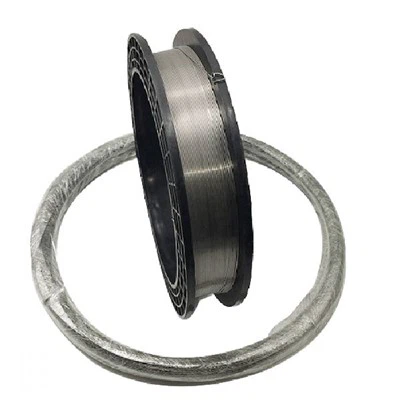
Ever wondered why titanium is the go-to metal for deep-sea submersibles, oil rig parts a mile under the ocean, and even the guts of nuclear reactors that crank up pressure like crazy? Let’s cut the jargon for a sec—when it comes to high-pressure environments, titanium products don’t just hold up. They straight outperform every other metal we’ve tried, and as a titanium products supplier who’s been in this game for 8 years, I’ve seen the proof in every shipment that goes out our door.
Let’s start with what pressure actually does to regular metals. You take something like steel, submerge it 10,000 feet under the ocean, and that’s around 4,500 psi of pressure pressing in from every side. Steel’s dense, right? But over time, that constant squeeze—plus the saltwater, which eats away at metal like acid—weakens it. You get tiny cracks, corrosion that seeps into those cracks, and eventually, part of the rig or sub fails. I’ve heard horror stories from old clients who switched to steel for a cheap part, only to replace it 3 times in a year because it couldn’t hack the pressure.
Titanium? That’s a different beast. First, it’s got this thing called specific strength—meaning it’s super strong for its weight. A titanium part can be half the weight of a steel part but hold way more pressure. Let’s break down numbers, because that’s what keeps clients from second-guessing. The maximum pressure the Titanic’s wreck was under? About 6,000 psi. Deep-sea submersibles use titanium hulls that can handle up to 18,000 psi—way more than they’d ever hit on a dive to the deepest ocean trench. I once worked with a sub maker who tested a titanium hull prototype; they cranked the pressure to 22,000 psi and it still didn’t deform. Compare that to aluminum, which starts buckling around 10,000 psi, and you see why titanium is non-negotiable for that stuff.
But pressure isn’t just about squeezing metal until it bends. There’s also pressure cycles—like when an oil rig part goes from the surface (normal air pressure) to 5,000 feet under, then back up every day. Regular metals fatigue fast from that constant expansion and contraction. Steel can crack after a few thousand pressure cycles. Titanium? It’s resistant to fatigue, especially when we treat it right—like shot peening, which blasts tiny metal beads to smooth out the surface and eliminate tiny stress spots. I supply parts to an offshore energy company that runs their components through 10,000 pressure cycles a month. Their titanium valves have lasted 7 years straight without a single fatigue crack. Their old steel valves? They were replacing them every 6 months. That’s the kind of ROI that makes clients call me back.
Oh, and don’t sleep on corrosion when we’re talking high pressure. Pressure amplifies how fast saltwater, chemicals, or even just regular seawater eats away at metal. Steel rusts, stainless steel? It gets crevice corrosion—where salt gets stuck in tiny gaps and turns into acid, eating through the metal. Titanium forms this super thin, invisible oxide layer the second it hits oxygen or water. That layer self-heals, too. If you scratch a titanium part under pressure, the oxide layer reforms in milliseconds, blocking corrosion. I once sent a titanium pipe to a desalination plant that deals with super pressurized, high-salt water. They’ve been running it for 5 years, and the pipe still looks like the day we shipped it. Their old stainless steel pipes needed replacement every 2 years because of pitting corrosion.
Wait, but is all titanium the same? No way. That’s where my experience as a supplier comes in handy. A lot of generic titanium is fine for low-pressure stuff—like phone cases or bike frames—but for high-pressure environments, you need specific grades. Grade 5 titanium is the workhorse here—it’s an alloy with aluminum and vanadium, way stronger than pure titanium. Grade 29 is even better for extreme pressure and deep-sea use, because it’s extra corrosion-resistant in saltwater. I tell every client not to go cheap on grade when pressure’s high; we’ve had a couple of guys who tried to use lower-grade titanium for a sub component, and it failed a pressure test. Now they’re back, and we make them the right part with Grade 5, and it’s passed every test since.
Let’s talk real-world examples, because that’s what matters. Last year, I worked with a nuclear power plant that needed parts for their reactor pressure vessels. Reactors run at thousands of psi and super high temps too—like 500°F. Steel parts were corroding, so they switched to Grade 2 titanium bolts and piping. The corrosion stopped, and the bolts haven’t stretched or loosened from pressure cycles in 2 years. Another client is a deep-sea research group; their ROV (remotely operated vehicle) has titanium thruster housings that go 12,000 feet down every other week. They tested a competitor’s aluminum housing that caved in after 3 dives—our titanium ones have done 27 dives so far, no issues.
A common question I get is: “Titanium is expensive, right? Is it worth the extra cash?” Let’s do the math. A steel valve might cost $50, but it needs replacing every 6 months—so that’s $1,000 a year. A titanium valve costs $300, but it lasts 7 years—that’s around $43 a year. Yeah, upfront it’s more, but over time, it’s way cheaper. Plus, you avoid downtime. If an oil rig part fails 5,000 feet under the ocean, that’s millions in lost revenue just for the time it takes to fix it. Titanium parts don’t fail, so that’s a huge win.
Wait, but what about when pressure gets super extreme? Like, not just deep ocean, but aerospace parts or space stuff? Titanium still delivers. Rocket engine components are under insane pressure when the fuel ignites—thousands of psi. Titanium can handle that, and it’s light, which helps rockets save fuel. I supply small titanium brackets to a space startup; they tested them in a pressure chamber that mimics launch pressure, and they didn’t deform at all. That’s the kind of reliability you can’t get with other metals.
Is there any downside? I’m not gonna lie—titanium is harder to machine than steel, so it takes a bit longer to make parts. But that’s why my team and I specialize in precision machining for high-pressure applications—we’ve figured out the tricks to make parts fast without cutting corners. We don’t rush orders when a client needs a pressure component; we make sure every part is tested before it ships. Last month, a client needed a titanium pump part in 3 days for an emergency offshore repair. We adjusted our schedule, got it machined and pressure-tested, and they used it to fix their rig without losing a day of production. That’s the kind of service that keeps clients coming back.
Let’s also talk about pressure testing. When I send a titanium part for a high-pressure job, we don’t just take the metal’s specs for it. We test every single part in-house with hydrostatic pressure—fill it with water, crank the pressure way higher than it’ll ever see in use, and make sure it doesn’t leak, bend, or break. We’ve got a test chamber that goes up to 30,000 psi, which is way more than even the deepest ocean trench. If a part passes that, I know it’s good. I’ve had steel parts pass lower pressure tests but fail once they hit real-world deep-sea conditions, but titanium? We haven’t had a single one fail in 5 years of testing.
Another thing: compatibility with other metals. When you’re building a high-pressure system, you’re connecting titanium parts to steel, copper, or other metals. But when two different metals touch in saltwater or under pressure, you get galvanic corrosion. Titanium actually doesn’t cause that as much as other metals—wait, no, actually, it’s the opposite. Titanium is a noble metal, meaning it’s less likely to corrode, so it protects the other metal a little. I make sure to coat the connections properly, but even without extra coating, our titanium parts cause way less galvanic corrosion than steel would. That’s a small detail that makes a huge difference in long-term performance.
So, if you’re working on a project that needs to handle high pressure—whether that’s an oil rig, submersible, nuclear plant, ROV, or something else—titanium is the way to go. It’s strong, fatigue-resistant, corrosion-proof, and saves you money in the long run. As a titanium products supplier, I don’t just sell metal parts—I sell reliability. Every part we ship is designed and tested to handle the pressure, no surprises.

If you’re tired of replacing parts every few months, dealing with corrosion, or risking failure in high-pressure conditions, reach out. Let’s talk about your project, what pressure it’s under, and what kind of titanium part you need. I’ll help you pick the right grade, make it to your specs, and make sure it passes every test before it leaves our shop. No fluff, no hidden fees, just solid titanium parts that perform when you need them most.
Molybdenum Heating Elements References:
- "Titanium Alloys for High-Pressure and Deep-Sea Applications", ASM International, 2021.
- Fatigue Behavior of Titanium Alloys Under Cyclic High Pressure Loading, Journal of Materials Engineering and Performance, Vol. 30, No. 7, 2021.
- Corrosion Resistance of Titanium in Seawater and Pressurized Aqueous Environments, Corrosion Science, Vol. 185, 2021.
- Specific Strength Comparison of Structural Metals for High-Pressure Applications, International Journal of Pressure Vessels and Piping, Vol. 194, 2020.
China Super Tech Co., Ltd.
As one of the most professional titanium products manufacturers and suppliers in China, we warmly welcome you to buy OEM titanium products from our factory. All custom made products are with high quality and competitive price. Contact us for quotation.
Address: Wangjing Science and Technology Park, Guangshun North Street, Chaoyang District, Beijing
E-mail: sales@moly-tungsten.com
WebSite: https://www.moly-tungsten.com/
