What is the difference between a manual lathe and a CNC lathe?
As a seasoned supplier in the lathe industry, I’ve witnessed firsthand the evolution and divergence of two primary types of lathes: the manual lathe and the CNC (Computer Numerical Control) lathe. Each has its unique characteristics, advantages, and ideal applications. Understanding the differences between them is crucial for anyone in the manufacturing sector, whether you’re a small – scale workshop owner or part of a large – scale manufacturing enterprise. Lathe

1. Operation Mechanism
The most fundamental difference between a manual lathe and a CNC lathe lies in their operation mechanisms.
A manual lathe is a more traditional piece of equipment. It requires a high level of skill and experience from the operator. The operator controls the movement of the cutting tool, spindle speed, feed rate, and other parameters by hand. For example, to change the depth of cut, the operator has to turn the handwheels on the lathe’s carriage. This hands – on control allows for a high degree of tactile feedback. The operator can feel the resistance and vibrations during the machining process, which is useful for detecting potential issues such as dull cutting tools or improper workpiece setup. However, it also means that the quality of the final product is highly dependent on the operator’s skill. A less – experienced operator may produce parts with inconsistent dimensions or surface finishes.
On the other hand, a CNC lathe is automated. It operates based on pre – programmed instructions. These programs are created using Computer – Aided Manufacturing (CAM) software. The programmer defines the toolpath, cutting parameters (such as spindle speed, feed rate, and depth of cut), and other machining operations in the CAM software. The program is then loaded into the CNC lathe’s controller, which sends signals to the servomotors and other components to carry out the machining operations. This automation reduces the need for constant manual intervention. Once the program is set up correctly, the CNC lathe can produce multiple parts with high precision and consistency.
2. Precision and Repeatability
Precision is of utmost importance in manufacturing, and there is a significant difference between manual and CNC lathes in this regard.
Manual lathes can achieve a reasonable level of precision, especially when operated by highly skilled machinists. However, achieving consistent precision over a large number of parts can be challenging. Small variations in the operator’s movements can lead to differences in part dimensions. For instance, when turning a cylindrical part, even a slight difference in the amount of force applied to the handwheel can result in a variation in the part’s diameter.
CNC lathes, on the other hand, excel in precision and repeatability. Since the machining operations are controlled by a computer – generated program, the same part can be reproduced with an extremely high degree of accuracy. Tolerances as tight as ±0.001 inches or even less can be achieved consistently. This makes CNC lathes ideal for mass – production of high – precision components, such as those used in the aerospace or medical industries, where even the slightest deviation can lead to product failure.
3. Complexity of Machining
The complexity of the parts that can be machined also differs between manual and CNC lathes.
Manual lathes are generally better suited for relatively simple machining operations. They are great for turning cylindrical shapes, facing the ends of workpieces, and performing basic threading operations. However, as the complexity of the part increases, the difficulty level for manual lathe operators also rises significantly. For example, machining a part with multiple curves or complex geometries would require a high level of manual dexterity and a deep understanding of machining techniques. The operator would have to make multiple passes with the cutting tool and constantly adjust the tool’s position and orientation.
CNC lathes, in contrast, are designed to handle complex machining tasks with ease. The pre – programmed toolpaths can include complex curves, tapers, and 3D geometries. The CNC controller can accurately position the cutting tool at any point in the machining space, allowing for the creation of intricate parts that would be nearly impossible to produce on a manual lathe. For example, in the production of turbine blades or complex automotive components, CNC lathes offer the flexibility and precision needed to create these parts efficiently.
4. Production Speed
In terms of production speed, CNC lathes have a clear advantage, especially for large – volume production.
Manual lathes are relatively slow, especially when it comes to producing multiple identical parts. The operator has to perform each machining step manually, which takes time. Additionally, the need for constant adjustments and quality checks further slows down the production process. For example, when turning multiple cylindrical parts, the operator has to set up the tool, make the cut, measure the part, and make any necessary adjustments for each individual part.
CNC lathes can significantly reduce production time. Once the program is set up, the lathe can run continuously, producing parts at a much faster rate. The automated tool changing capabilities of many CNC lathes also eliminate the time – consuming process of manually changing tools. For high – volume production, CNC lathes can reduce the lead time and increase productivity, which is crucial for meeting tight deadlines and remaining competitive in the market.
5. Training Requirements
The training needed to operate a manual lathe and a CNC lathe is also quite different.
Operating a manual lathe requires in – depth knowledge of machining principles, such as cutting speeds, feeds, and lubrication. Machinists need to be proficient in using hand tools, reading blueprints, and understanding geometric tolerances. Training for manual lathe operation typically involves a long – term apprenticeship or vocational training program. It takes years of practice to develop the skills needed to produce high – quality parts consistently.
CNC lathe operators, on the other hand, need to have a good understanding of programming concepts in addition to basic machining knowledge. They must be able to use CAM software to create and edit machining programs. While the initial learning curve for CNC programming can be steep, there are many training courses and resources available to help operators get up to speed. Once an operator has mastered the programming skills, they can operate a variety of CNC machines with relative ease.
6. Cost
Cost is an important consideration for any manufacturing business, and there are significant differences in the cost of manual and CNC lathes.
Manual lathes are generally less expensive to purchase. They have a simpler design and fewer components compared to CNC lathes. Additionally, the maintenance costs of manual lathes are relatively low. Since they do not rely on complex electronic systems and software, the need for specialized technicians for repairs is reduced. This makes manual lathes a more affordable option for small – scale workshops or businesses with a limited budget.
CNC lathes, on the other hand, are more expensive to purchase. The advanced technology, including the CNC controller, servomotors, and software, adds to the cost. Moreover, the maintenance of CNC lathes can be costly. Regular software updates are required to ensure optimal performance, and any breakdowns may require the expertise of a trained technician. However, despite the higher upfront and maintenance costs, the increased productivity, precision, and ability to handle complex parts can make CNC lathes a cost – effective investment in the long run, especially for large – scale production.
Conclusion
In conclusion, both manual lathes and CNC lathes have their own unique advantages and disadvantages. Manual lathes offer a high level of tactile control, are suitable for simple machining tasks, and are more affordable. They are a great choice for small – scale operations, prototyping, and applications where a high degree of manual skill is valued.
CNC lathes, on the other hand, provide unparalleled precision, repeatability, and the ability to handle complex machining tasks. They are ideal for mass – production of high – precision components and can significantly increase productivity.
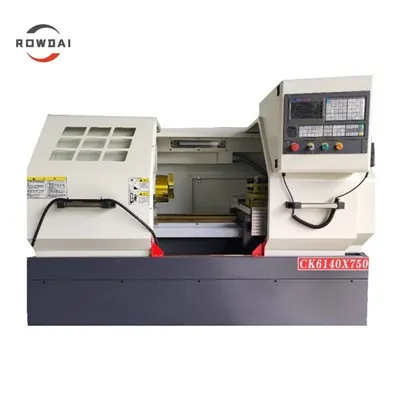
As a lathe supplier, I understand that choosing the right lathe depends on your specific manufacturing needs, budget, and production volume. If you’re unsure which type of lathe is best for your business, I’m here to help. Our team of experts can provide you with detailed advice and guidance based on your requirements. Whether you’re looking for a reliable manual lathe or a state – of – the – art CNC lathe, we have a wide range of options to meet your needs. Contact us to start a discussion about your lathe requirements and explore how we can help you take your manufacturing operations to the next level.
Cylindrical Grinding Machine References
- “Machining Fundamentals” by John A. Schey
- “CNC Programming Handbook” by Peter Smid
- Various industry – specific journals and publications on manufacturing technology
Henan Rowdai Machinery Equipment Co., Ltd.
As one of the most professional lathe manufacturers in China, we’re featured by quality products and good price. Please rest assured to buy high-grade lathe for sale here from our factory. If you have any enquiry about cooperation, please feel free to email us.
Address: Building 9, E-Commerce Industrial Park, High-Tech Zone, Zhengzhou, Henan, China
E-mail: rowdai@rowdai.com
WebSite: https://www.rowdai.com/
